Container Gardens
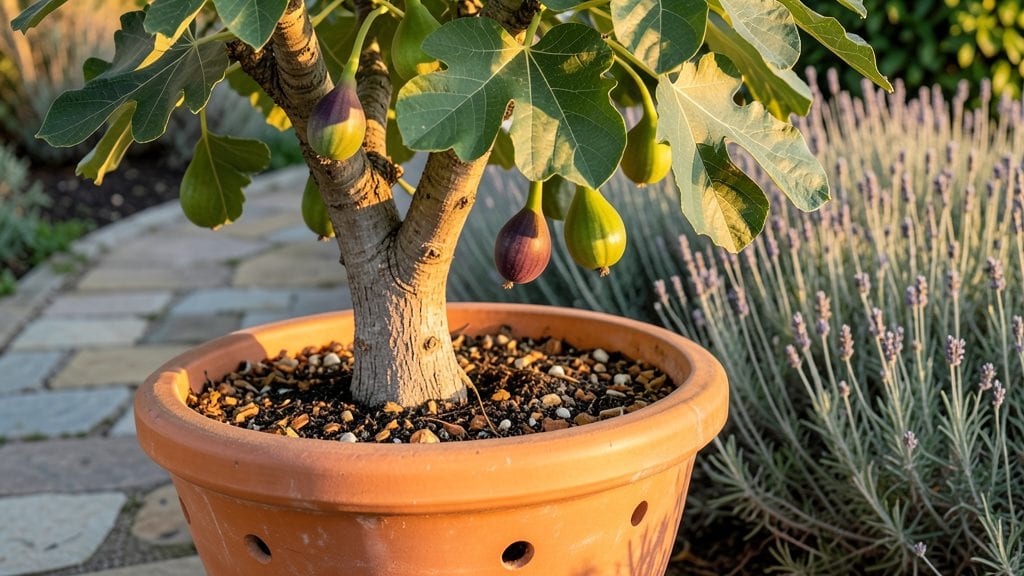
Growing a fig tree in a pot delivers sweet rewards with minimal space. 🌱 I learned the hard way that container figs need the right pot, soil, and sunlight—but once you nail those basics, you’ll harvest juicy fruit even on a balcony.
The key is mimicking their Mediterranean roots while keeping roots from circling too tightly.
Start with a 15- to 25-gallon pot (bigger is better for mature trees) and well-draining soil mixed with sand or perlite. Place it in full sun (6+ hours daily) and water only when the top inch feels dry—overwatering is the #1 killer.
Prune in late winter to shape the tree and remove dead wood, and fertilize lightly in spring.
By summer, you’ll see lush foliage and tiny figs forming. With proper care, a potted fig can produce fruit for decades, though cold climates need winter protection (move indoors or wrap the pot). The first harvest might be small, but each year brings bigger rewards—and fewer grocery store trips.
Even in small spaces, figs thrive when you give them the right conditions. Whether you’re in a city apartment or a suburban yard, this method turns a simple pot into a fruit-bearing powerhouse. Ready to get started?
📚 In This Guide
- What you need
- Instructions
- Tips and common mistakes
- Wrapping up and next steps
What you need
- ● Fig Tree: A dwarf or semi-dwarf variety (like 'Little Miss Figgy' or 'Celeste') for pots. Check local nurseries or online plant shops!
- ● Pot: A minimum 15-gallon container (18–24" deep) with drainage holes. Terracotta or fabric pots work great!
- ● Potting Mix: A well-draining blend: 60% high-quality potting soil, 30% perlite or pumice, and 10% compost.
- ● Drainage Layer: 2–3 inches of gravel, small rocks, or broken pottery pieces at the pot’s bottom.
- ● Fertilizer: A balanced, slow-release fertilizer (10-10-10) or organic options like composted manure.
- ● Mulch: 1–2 inches of organic mulch (e.g., straw or wood chips) to retain moisture.
- ● Gloves (to protect your hands from thorns!).
- ● Trowel or small shovel for planting and repotting.
- ● Watering can with a rose attachment (for gentle watering).
- ● Pruning shears (for shaping and maintaining the tree).
- ○ Support stake or trellis (optional, for larger varieties or windy areas).
- ● Plant saucer or tray (to catch runoff and prevent messes).
- ○ pH test kit (optional, to check soil acidity—figs prefer 6.0–7.0).
Step-by-step instructions for growing a fig tree in a pot
Here's how to nurture a productive fig tree in containers—even in tight spaces.
🌱 Step 1: Choose the Right Container and Soil Mix
Select a pot at least 12 inches wide and deep with drainage holes—fig roots need room to spread. I use unglazed terracotta because it breathes and prevents root rot. A well-draining mix is critical: blend 50% potting soil, 30% perlite, and 20% compost. This prevents soggy roots while holding enough moisture for summer fruiting.
Fill the pot halfway, then place your fig tree (bare-root or potted) in the center. The root flare should sit just above the soil line—burying it too deep suffocates the tree. Tap the pot gently to settle the soil around roots, then water until it drains freely from the bottom.
☀️ Step 2: Position for Maximum Sunlight and Warmth
Figs thrive in full sun—place your pot where it gets at least 6-8 hours of direct sunlight daily. A south-facing patio or balcony works best. If you're in a hot climate, provide afternoon shade to prevent leaf scorch. I always move my pots closer to the sun in spring and farther back in summer to balance light and temperature.
Figs love warmth. In cooler zones, bring the pot indoors near a sunny window when nighttime temps drop below 50°F. Use a heat mat during germination if starting from seed, keeping soil at 70-75°F. Watch for yellowing leaves—this signals either too much shade or cold drafts.
💧 Step 3: Water Deeply and Adjust for the Seasons
Water your fig tree deeply once a week in summer, letting the top 2 inches of soil dry out between waterings. Overwatering is the #1 killer of potted figs—yellow leaves or mushy stems mean you're drowning the roots. In winter, reduce watering to every 2-3 weeks, as growth slows dramatically.
Mulch the surface with 1-2 inches of straw or wood chips to retain moisture and regulate soil temperature. This also keeps roots cool in summer and insulated in winter. I always check soil moisture by sticking my finger 1 inch deep—if it feels dry, it's time to water.
✂️ Step 4: Prune for Shape and Fruit Production
Prune your fig tree in late winter or early spring before new growth begins. Remove any dead, crossing, or weak branches, cutting back to the nearest outward-facing bud. This opens the canopy to sunlight, which is crucial for fruit development. I also trim back any suckers (shoots at the base) to direct energy upward.
For container-grown figs, limit height to 5-6 feet to keep it manageable. Shorten long branches by one-third to encourage bushier growth. Avoid heavy pruning in summer—this stresses the tree when it's already fruiting. Watch for new leaf growth after pruning; this signals the tree is recovering well.
🍇 Step 5: Fertilize and Harvest for Maximum Yield
Feed your fig tree every 4-6 weeks during the growing season with a balanced 10-10-10 fertilizer or organic options like fish emulsion. Reduce feeding in fall and winter. Figs are heavy feeders, but too much fertilizer leads to leafy growth at the expense of fruit. I always fertilize after watering to prevent root burn.
Harvest figs when they're fully colored and slightly soft to the touch. They won't ripen further once picked. In containers, you'll get 2-4 harvests per season, depending on your variety. After harvesting, trim any spent stems to encourage new growth. Store unripe figs at room temperature—they'll ripen in 2-3 days.
Tips & tricks for perfect container-grown figs
Here's what I've learned after years of growing figs in pots—these little details make all the difference.
Container Size Matters: While the instructions call for a 12-inch pot, I always go one size up for mature trees. A 14-16 inch pot gives roots room to spread without becoming root-bound, which directly impacts fruit production. If you're growing multiple fig trees, space them at least 3 feet apart—they'll compete for nutrients and sunlight otherwise. For dwarf varieties, you can get away with slightly smaller pots, but still prioritize depth over width.
Soil Mix Secrets: The 50-30-20 blend is perfect, but I add a handful of garden lime to the mix to maintain pH between 6.0-7.0—figs hate acidic soil. Also, if you're planting in spring, mix in a slow-release fertilizer (like Osmocote) when you first pot your tree. This gives roots a nutrient boost without overwhelming them. Just follow the package instructions for application rates.
Sunlight Strategy: Those 6-8 hours of sun are non-negotiable, but here's the trick: rotate your pot every 2-3 weeks. This ensures even growth and prevents the tree from leaning toward the light. In urban settings, I've had success using reflective surfaces like white walls or mirrors to bounce extra light onto the tree. If you notice leaves curling or turning yellow, it's a sign your tree needs more sunlight—move it immediately.
Watering Wisdom: The 1-inch deep soil check is gold, but I've found that container-grown figs often need water more frequently than in-ground trees. In extreme heat (above 90°F), I water every 3-4 days instead of weekly. Also, always water at the base of the tree rather than overhead—this prevents fungal diseases that can develop on the leaves. I use a watering can with a long spout to reach the roots without disturbing the mulch.
Pro Tips for Grow A Fig Tree In A Pot
- Here's what I've learned after years of growing figs in pots—these little details make all the difference.
- Container Size Matters: While the instructions call for a 12-inch pot, I always go one size up for mature trees.
- Soil Mix Secrets: The 50-30-20 blend is perfect, but I add a handful of garden lime to the mix to maintain pH between 6.0-7.0—figs hate acidic soil.
Frequently asked questions
Got questions about growing figs in pots? You’re not alone! Here are answers to the most common concerns—so you can enjoy homegrown figs with confidence.
Can fig trees survive winter in a pot?
Fig trees are semi-hardy and can handle light frost, but pots freeze more easily than ground soil. If temps drop below 20°F (-7°C), move your potted fig to a sheltered spot (like a garage or against a sunny wall) or wrap the pot in bubble wrap for insulation. Prune back any damaged branches in spring.
How often should I water a potted fig tree?
Water when the top 1–2 inches of soil feel dry (stick your finger in to check!). Figs hate soggy roots, so ensure the pot has drainage holes. In summer, water every 2–3 days; reduce to once a week in winter. Overwatering is the #1 killer—let the soil dry out between waterings!
What’s the best fertilizer for potted fig trees?
Use a balanced, slow-release fertilizer (like 10-10-10) in early spring, then switch to a low-nitrogen, high-phosphorus formula (e.g., 5-10-10) when flowers appear. Avoid heavy nitrogen—it promotes leaves over fruit! Feed every 4–6 weeks during growing season (spring–fall).
Why aren’t my figs ripening in a pot?
Figs need full sun (6+ hours daily) and warmth to ripen. If your pot’s in shade or temps stay cool, move it to a sunnier spot. Also check for crowded roots—root-bound trees fruit poorly. Repot every 2–3 years or trim roots if they’re circling the container.
Can I grow a fig tree in a pot indoors?
Yes, but only dwarf varieties (like ‘Little Miss Figgy’ or ‘Brown Turkey’) thrive indoors. Place it near a south-facing window and supplement with a grow light (12–14 hours/day) in winter. Expect smaller fruit—outdoor pots yield bigger harvests!
Wrapping up and next steps
Growing a fig tree in a pot is a rewarding way to enjoy fresh, homegrown fruit—even in small spaces! 🌱 With the right container, soil, sunlight, and care, your tree can thrive and produce delicious figs year after year. Start small, stay consistent with watering and pruning, and soon you’ll be harvesting sweet, sun-ripened fruit right from your balcony or patio.
Ready to take the next step? Pick your favorite fig variety, grab a pot, and get planting! 🌿 And if you’re feeling ambitious, explore advanced tips for maximizing your harvest or troubleshooting common issues. Happy gardening!