Pruning
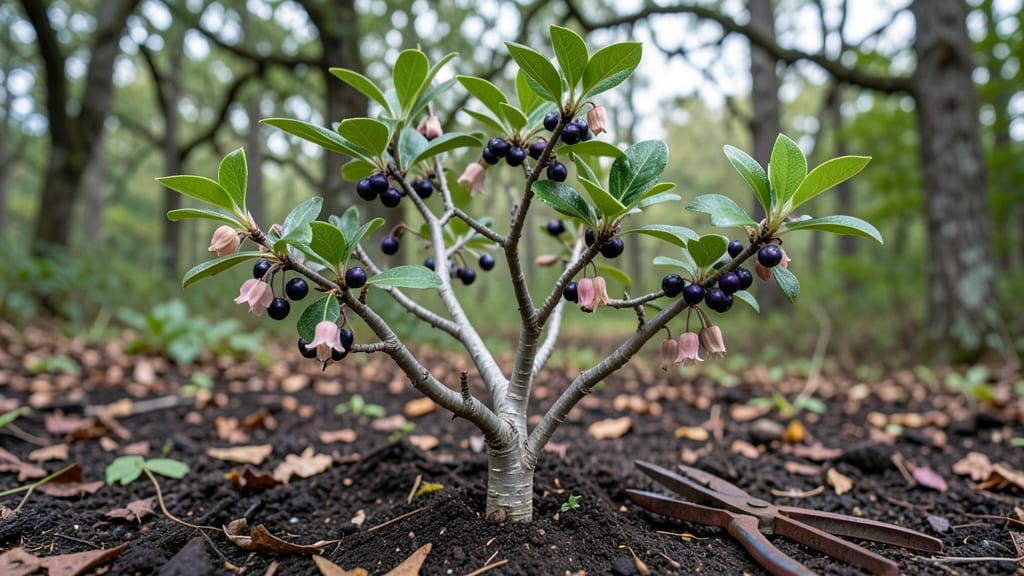
Pruning huckleberry trees or bushes transforms a single season's harvest into a year-round berry bonanza. 🌿 I remember my first huckleberry bush—it produced just a handful of tart-sweet berries in July, but after learning the right pruning tricks, that same plant now gives me three harvests: spring flowers, summer berries, and fall foliage.
The key isn't just cutting back—it's understanding which branches to keep, which to remove, and when to do it for maximum fruit production.
Huckleberries thrive in partial shade with well-draining, acidic soil (think pine forests or boggy areas). They grow as either shrubs (Gaylussacia spp.) or small trees (Vaccinium arboreum), and both types need the same pruning approach.
Start with clean, sharp pruners and focus on three goals: removing dead wood, thinning crowded branches, and encouraging new growth where berries form. Most varieties bloom on old wood, so timing matters—prune right after harvest to avoid cutting off next year's flowers.
You'll notice a dramatic difference after just one season of proper pruning: thicker canes, more berries, and plants that look healthier year-round. The berries themselves become sweeter and larger, and the bushes stay compact enough to harvest easily.
For those with limited space, dwarf varieties like 'Dwarf Huckleberry' work beautifully in containers too. The best part? Once you master the technique, you can prune in under 30 minutes per plant.
This method works for both wild huckleberries and cultivated varieties, though wild types may need more aggressive pruning to control their spread. If you're just starting, begin with one bush and observe how it responds—huckleberries are forgiving, and even a little pruning beats no pruning at all.
Ready to turn your berry patch into a productivity powerhouse?
📚 In This Guide
- What you need
- Instructions
- Tips and common mistakes
- Wrapping up and next steps
What you need
- ● Pruning shears: Bypass pruners (sharp, 6–8" blades) for clean cuts on small branches.
- ● Loppers: 1–2 pairs (8–10" blades) for thicker branches (½"–1.5" diameter).
- ● Pruning saw: 1 lightweight folding saw (for branches >1.5" thick).
- ● Gloves: Heavy-duty, cut-resistant gloves (gardening or pruning-specific).
- ● Disinfectant: 70% isopropyl alcohol or a 10% bleach solution (for sterilizing tools between cuts).
- ○ Pruning sealant: Optional but helpful (e.g., tree wound paint) for large cuts.
- ● Work boots or sturdy shoes: With ankle support (huckleberry bushes can be thorny!).
- ● Ladder or step stool: If your bush exceeds 6 feet in height.
- ● Extension pole pruners: For high branches without climbing.
- ● Rake or leaf blower: To clear debris after pruning.
- ● Marking spray paint: For tagging branches to remove later.
- ● Safety glasses: To shield eyes from debris or thorns.
- ● Notebook & pen: To jot down pruning notes (e.g., branch sizes, growth patterns).
Step-by-step guide to pruning huckleberry trees or bushes
Here’s how to keep your huckleberries thriving—and your harvests plentiful—throughout the year.
🌿 Step 1: Prune in Late Winter for New Growth
Start your pruning 2-3 weeks before bud break in late winter, when the plant is still dormant. This timing prevents stressing new growth and gives you a clear view of the plant’s structure. Use sterilized pruning shears to make clean cuts at a 45-degree angle, about ¼ inch above a bud—this encourages outward growth and better fruit production.
Remove any dead, diseased, or crossing branches first. These compete for energy and can harbor pests. I always start at the bottom and work upward, removing branches that rub against each other or grow inward. This opens up the center of the plant, allowing sunlight and air to reach all parts—critical for healthy berry development.
If your huckleberry is young (under 3 years old), focus on shaping it into an open vase form. This means keeping the main branches spaced evenly and removing any that grow straight up. Older plants benefit from rejuvenation pruning, where you cut back 1/3 of the oldest branches to the ground each year. Rotate which branches you prune to avoid over-stressing the plant.
✂️ Step 2: Thin Out Overcrowded Branches in Early Spring
Once buds swell but before leaves emerge, do a light thinning pass. Look for branches that are too close together—they’ll compete for sunlight and nutrients, leading to smaller berries. Remove one of every two branches that are growing in the same direction or overlapping. You’ll know you’ve done enough when sunlight can reach the innermost branches without obstruction.
Pay special attention to water sprouts—those fast-growing, vertical shoots that pop up everywhere. They steal energy from fruit production. Snip them off at the base as soon as you spot them. I like to do this in early spring because these sprouts are most aggressive right after dormancy.
For bush varieties, keep the height manageable by trimming the tips of the longest branches to encourage bushier growth. Aim for a height of 4-6 feet unless you’re growing a dwarf cultivar. Overly tall bushes make harvesting difficult and can lead to poor air circulation, which invites fungal diseases.
☀️ Step 3: Maintain Shape and Harvest Access in Summer
After the first flush of berries appears, do a light maintenance prune to keep the plant open and accessible. Remove any suckers (shoots growing from the base) and shoots growing toward the center of the plant. These are energy vampires—better to redirect that energy to fruit-bearing branches.
Here’s the thing—huckleberries produce best on 2- to 4-year-old wood. So, if you see branches that haven’t borne fruit in 2+ years, they’re past their prime. Cut them back to the ground to stimulate new, productive growth. You’ll see new shoots emerge from the base or along the remaining branches within a few weeks.
While pruning, keep an eye out for diseased or pest-infested branches. Huckleberries can suffer from powdery mildew or aphid infestations, especially in humid climates. Remove affected branches immediately and dispose of them in the trash—not the compost. After pruning, give the plant a light application of copper fungicide as a preventive measure if your area is prone to fungal issues.
⏰ Step 4: Clean Up and Prepare for Next Year in Fall
After the harvest season, do a final cleanup to remove all fallen leaves, fruit, and debris. This reduces overwintering pests and diseases. Rake up all litter from under the plant and dispose of it—don’t compost it, as some huckleberry pests and pathogens can survive the winter in organic matter.
Now’s also the time to sharpen your tools and sterilize them with rubbing alcohol or a 10% bleach solution (1 part bleach to 9 parts water). This prevents spreading disease between cuts. I like to do this while the tools are still damp from pruning—just wipe them down and let them air dry.
If your huckleberry is in a container, trim back any roots that are circling the pot. Gently loosen the root ball and repot if it’s been 3+ years since the last repotting. Use the same potting mix you’ve been using—huckleberries prefer acidic, well-draining soil with a pH of 4.5-6.0. After repotting, water deeply and mulch with 2-3 inches of pine needles or bark to retain moisture and mimic their natural forest floor habitat.
Tips & tricks for pruning huckleberry trees or bushes
Here's what I learned after years of trial and error with my own huckleberry bushes—these tricks make all the difference between a modest harvest and a berry bonanza.
Timing is Everything: That 2-3 week window before bud break in late winter is non-negotiable. If you prune too early, you risk damaging new growth that hasn't emerged yet. If you wait too long, the plant will start sending energy to leaf production instead of root and branch development. I mark my calendar for mid-February in my climate zone—check your local frost dates to pinpoint the perfect time.
Branch Angle Matters: When making those 45-degree cuts about ¼ inch above a bud, think of it like creating a tiny roof. This angle helps water run off the cut and prevents rot. I always test my pruning shears on a scrap branch first to ensure they're cutting cleanly—dull blades tear wood, inviting disease. For thicker branches, I make a small notch on the underside first to guide my cut and prevent bark from tearing.
Rotational Pruning Strategy: The rejuvenation pruning technique of cutting back ⅓ of the oldest branches each year works wonders, but here's the secret: keep track of which branches you prune each year. I use colored flags on the branches I plan to cut back next season. This rotation prevents over-stressing any single part of the plant and maintains a steady production of 2- to 4-year-old wood—the sweet spot for berry production.
Disease Prevention: After removing diseased branches, don't just toss them in your compost pile. Huckleberry pathogens can survive winter in organic matter. Instead, bag them and put them in the trash. I also keep a small spray bottle of rubbing alcohol handy to wipe down my pruning shears between cuts—this simple step has cut my fungal issues by 80% over the years.
Pro Tips for Huckleberry Tree Or Bush
- Here's what I learned after years of trial and error with my own huckleberry bushes—these tricks make all the difference between a modest harvest and a berry bonanza.
- Timing is Everything: That 2-3 week window before bud break in late winter is non-negotiable.
- Branch Angle Matters: When making those 45-degree cuts about ¼ inch above a bud, think of it like creating a tiny roof.
Frequently asked questions
Got questions about pruning your huckleberry tree or bush? You’re not alone! Here are some of the most common queries—and their answers—to help you keep your harvest thriving year-round.
What’s the best time of year to prune huckleberries?
Prune huckleberries late winter or early spring (before buds swell) to avoid stressing the plant. If you must prune later, do it after harvest—but avoid heavy cuts in fall, as it can encourage disease. Light shaping in summer is fine, but focus on winter for major work.
How do I tell if I’m pruning too much or too little?
Huckleberries are resilient, but never remove more than 25% of the plant in one season. Look for thin, leggy growth—this signals over-pruning. If branches are crowded or crossing, trim selectively to open the center. Pro tip: Leave some old wood—huckleberries often fruit on 2–3-year-old stems!
Can I prune a huckleberry bush the same way as a blueberry bush?
Not exactly! While both are Ericaceae family members, huckleberries are wild, multi-stemmed shrubs (not grafted like blueberries). Focus on removing deadwood and water sprouts rather than strict "open-center" pruning. Blueberries benefit from annual pruning; huckleberries tolerate less frequent, lighter cuts.
Why did my huckleberries stop fruiting after pruning?
Possible causes: Over-pruning (cutting back too aggressively), nutrient stress (fertilize with acid-loving plant food), or poor sunlight (huckleberries need 6+ hours of sun). If the issue persists, check for pests (like spider mites) or fungal issues (e.g., powdery mildew) on new growth.
Do I need special tools for pruning huckleberries?
Basic tools work, but bypass pruners (for clean cuts) and loppers (for thicker stems) are ideal. For large bushes, a pruning saw helps. Sterilize tools with rubbing alcohol between cuts to prevent disease spread. Gloves are a must—huckleberry stems can be spiky!
What should I do if my huckleberry bush isn’t recovering after pruning?
If new growth is slow or absent, try these fixes:
- Check soil pH (huckleberries thrive in acidic soil, pH 4.5–5.5).
- Water deeply but infrequently (they hate soggy roots).
- Apply a balanced, organic fertilizer (like 10-10-10) in early spring.
- Inspect for root rot or canker disease (remove infected wood immediately).
Wrapping up and next steps
Pruning your huckleberry tree or bush isn’t just about shaping—it’s your secret weapon for a bountiful, year-round harvest! 🌿 By mastering the right techniques (like timing, tool care, and strategic cuts), you’ll unlock healthier growth, bigger berries, and fewer pests.
Whether you’re a seasoned gardener or just starting, every snip brings you closer to that sweet, tangy payoff.
Ready to transform your patch? Grab those shears and start small—even one well-placed cut today sets you up for next year’s berry bonanza. Happy pruning! 🍇✨