Pruning
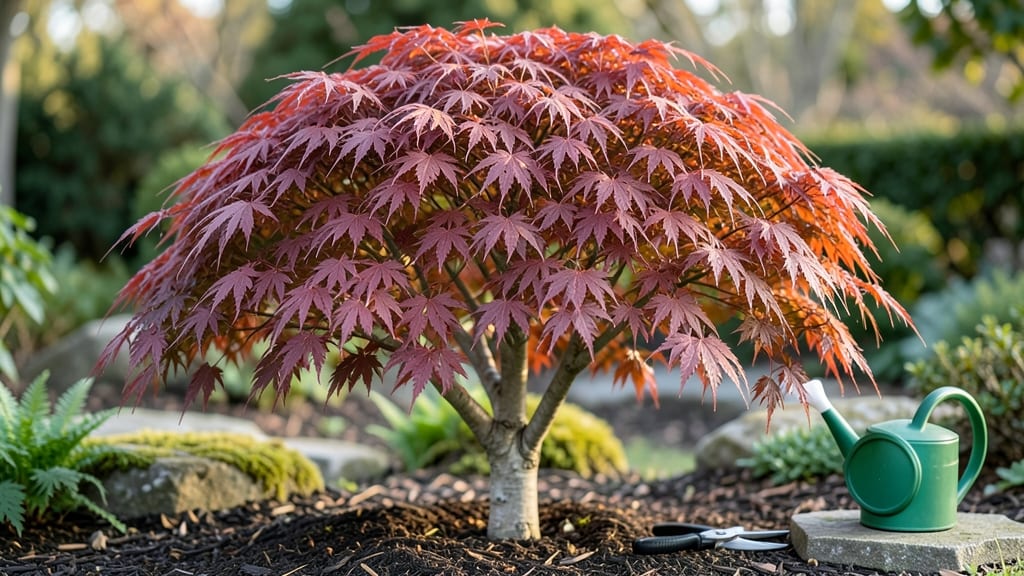
The laceleaf weeping Japanese red maple tree transforms any yard into a living watercolor painting with its cascading branches and fiery foliage. 🌿 I remember the first time I saw one in full autumn splendor—its delicate leaves blazing like embers against a crisp blue sky.
This isn't just a tree; it's a year-round spectacle, from spring's fresh green flush to winter's subtle bronze glow.
Pruning this beauty isn't about harsh cuts—it's about sculpting its graceful weeping form while encouraging vibrant color. You'll need sharp pruning shears, a ladder (for higher branches), and 30 minutes of focused attention twice a year.
The key is working with its natural shape rather than against it, which keeps those signature lace-like leaves unfurling dramatically.
What you'll end up with is a tree that becomes the centerpiece of your landscape, its velvety red foliage drawing eyes all season long. The weeping habit creates perfect shade spots underneath while the bark adds winter interest. Even in small spaces, this tree delivers maximum impact with minimal footprint.
Whether you're in Zone 5 or 8, this guide covers regional adjustments to keep your laceleaf maple thriving. We'll also discuss companion plants that complement its elegant form—think hostas at its base and azaleas nearby for a harmonious garden scene.
📚 In This Guide
- What you need
- Instructions
- Tips and common mistakes
- Wrapping up and next steps
What you need
- ● Pruning shears: Sharp, bypass-style shears (for clean cuts on small branches, ¼"–¾" diameter). Quantity: 1 pair.
- ● Loppers: For medium branches (¾"–2" diameter). Quantity: 1 pair.
- ● Pruning saw: For thicker branches (2"+ diameter). Quantity: 1.
- ● Disinfectant: 70% isopropyl alcohol or a tree-pruning sealant (to prevent disease spread). Quantity: Small bottle.
- ● Gloves: Heavy-duty, cut-resistant gloves (protects from thorns and sap). Quantity: 1 pair.
- ○ Extension pole: 6–10 ft. (for high branches). Optional but helpful.
- ○ Tree wound dressing: Optional (only use if the tree has large cuts; skip for small prunes).
- ● Safety gear: Goggles and long sleeves (sap can irritate skin!).
- ● Check the best pruning time—early spring (before buds swell) or late winter is ideal for this variety.
- ● Weather: Choose a dry, calm day (avoid rain or wind to prevent sap splatter).
- ● Research your tree’s specific needs—laceleaf maples thrive with minimal pruning but may need shaping for weeping branches.
Step-by-Step pruning guide for your laceleaf weeping Japanese red maple
This tree’s delicate branches need careful shaping to maintain its signature weeping form and vibrant foliage.
🌿 Step 1: Choose the Right Time for Pruning
Prune your laceleaf weeping Japanese red maple during late winter or early spring, just as new growth begins. This timing ensures you remove dead wood while avoiding the stress of summer heat or the risk of disease spread during wet spring conditions. I always mark my calendar for February to early March—this gives the tree time to heal before the growing season kicks in.
If you must prune in summer, do it after flowering to avoid cutting off next year’s blooms. Never prune in fall, as late cuts stimulate tender new growth that won’t harden off before winter. Watch for bud swell—that’s your signal the tree is waking up and ready for shaping.
✂️ Step 2: Remove Dead, Diseased, or Crossing Branches First
Start with sanitation cuts—remove any branches that are dead, diseased, or rubbing against others. Use clean, sharp pruners to make cuts just outside the branch collar (the swollen area where the branch meets the trunk). I disinfect my tools with 70% isopropyl alcohol between cuts to prevent spreading pathogens.
Look for branches growing straight up—these compete with the tree’s natural weeping habit. Cut these at their base, but leave strong, downward-growing branches to maintain the tree’s elegant silhouette. If a branch is larger than ½ inch in diameter, use a pruning saw for a clean cut. Always make the cut on the underside of the branch to prevent water from pooling.
🌱 Step 3: Thin and Shape for Airflow and Form
Thin the canopy by removing 10-20% of the branches to improve airflow and light penetration. Focus on the outer edges of the tree, where branches may be growing too densely. I aim for a balanced, open structure—this prevents fungal issues and lets the tree’s signature red foliage shine year-round.
To maintain the weeping habit, avoid cutting the longest, most graceful branches—these define the tree’s shape. Instead, trim overly vigorous side shoots that disrupt the flow. Use hand pruners for branches under ¼ inch, and loppers for those between ¼ and ½ inch. Never remove more than 25% of the canopy in one season—this stresses the tree and can lead to weak regrowth.
☀️ Step 4: Refine the Silhouette and Encourage New Growth
Step back and assess the tree’s form from all angles. The laceleaf weeping Japanese red maple should have a pyramidal, cascading shape with branches evenly spaced. Trim any sprouts growing from the trunk (called "water sprouts")—these drain energy from the tree’s structure. Cut them back to a bud or lateral branch to redirect growth.
For a more dramatic weeping effect, you can shorten the longest branches by 10-20% to encourage bushier growth at the tips. Make your cuts just above a bud facing outward—this promotes new growth in the right direction. Avoid heavy pruning of the lead branches (the longest, downward-growing ones), as this can disrupt the tree’s natural habit.
🪴 Step 5: Clean Up and Monitor for Recovery
After pruning, collect and dispose of all debris—never leave cuttings on the ground, as they can harbor disease. I always sterilize my tools again with rubbing alcohol before storing them. Water the tree deeply after pruning to help it recover, but avoid overwatering, which can lead to root rot.
Monitor the tree over the next 4-6 weeks for signs of stress, like yellowing leaves or wilting branches. If you see new growth emerging from the cuts, that’s a good sign! The laceleaf weeping Japanese red maple is resilient, but avoid fertilizing immediately after pruning—wait until new growth appears before applying a balanced, slow-release fertilizer to support recovery.
Tips & tricks for pruning your laceleaf weeping Japanese red maple
Your laceleaf weeping Japanese red maple deserves careful attention—these refined techniques will help preserve its stunning form and vibrant foliage for years.
Timing is Everything: The February to early March window isn't just about avoiding winter stress—it's when the tree's natural healing processes are most active. If you must prune in summer, wait until after flowering to prevent compromising next year's blooms. I've seen trees stressed by late summer cuts develop weak growth that struggles to harden before winter. Watch for bud swell as your definitive cue—the tree's way of saying "I'm ready."
Precision Cuts Matter: When shaping your tree in Step 4, focus on making cuts just above outward-facing buds to encourage new growth in the right direction. This creates a more dramatic weeping effect while maintaining the tree's natural pyramid shape. For branches larger than ½ inch, use a pruning saw to make clean cuts on the underside—this prevents water from pooling and reduces the risk of disease entry points. I always test my tools on small branches first to ensure they're sharp enough for clean cuts.
Canopy Balance is Key: The 10-20% thinning guideline in Step 3 isn't arbitrary—it creates the perfect balance between airflow and foliage density. Over-thinning can expose the tree to harsh winds, while under-thinning leads to crowded branches that block light penetration. I recommend working in sections, stepping back frequently to assess the overall silhouette. The goal is to maintain that signature cascading form while preventing fungal issues from poor airflow.
Post-Pruning Care: That 4-6 week recovery period is crucial—it's when the tree's vascular system repairs itself. Deep watering after pruning helps, but avoid overwatering which can lead to root rot. I've found that applying a thin layer of mulch around the base helps maintain soil moisture while protecting roots. And remember, the tree's resilience means it can handle some stress, but waiting until new growth appears before fertilizing gives it the best chance to recover strong.
Pro Tips for Laceleaf Weeping Japanese Red Maple Tree
- Your laceleaf weeping Japanese red maple deserves careful attention—these refined techniques will help preserve its s...
- Timing is Everything: The February to early March window isn't just about avoiding winter stress—it's when the tree's...
- Precision Cuts Matter: When shaping your tree in Step 4, focus on making cuts just above outward-facing buds to encou...
Frequently asked questions
Got questions about caring for your laceleaf weeping Japanese red maple? You’re not alone—this stunning tree has unique needs! Here are answers to the most common queries to keep your tree thriving year-round.
When is the best time to prune my laceleaf weeping Japanese red maple?
The ideal window is late winter to early spring (before buds swell), but you can also prune in summer if needed. Avoid heavy pruning in fall—it stresses the tree before winter. Light shaping in early spring keeps its graceful form while preserving vibrant foliage.
How much can I prune without harming the tree?
Stick to the 10-20% rule: Never remove more than 20% of the canopy in one season. For laceleaf maples, focus on dead, crossing, or overcrowded branches first. Over-pruning weakens the tree and fades its signature red hues.
Why are my leaves turning brown or yellow?
Brown/yellow leaves often signal stress from overwatering, underwatering, or nutrient deficiencies. Check soil moisture (keep it consistently moist but not soggy) and test pH (ideal: 5.0–6.5). Yellowing in spring? It could be iron chlorosis—apply iron supplements if needed.
Does this tree need full sun, or can it handle shade?
While it loves morning sun, laceleaf maples tolerate partial shade (4–6 hours of sunlight daily). Too much shade? Expect less vibrant foliage and slower growth. For best color, plant in a spot with dappled light, like near a building or under taller trees.
What’s a good alternative if I want a weeping maple with lower maintenance?
Consider the Bloodgood Japanese maple (upright but hardy) or Crimson Queen (dwarf weeping variety). Both are disease-resistant and need less pruning. For a true weeping look with easier care, try the Dwarf Weeping Norway Maple—though it lacks the laceleaf’s delicate texture.
Wrapping up and next steps
The laceleaf weeping Japanese red maple tree is a stunning addition to any landscape, offering vibrant foliage and graceful form year-round.
By mastering the art of pruning—whether for shape, health, or seasonal color—you’ll keep this beauty thriving and breathtaking. Now’s the perfect time to grab your tools and give your tree the care it deserves!
🌿 Next step: Schedule your first pruning session in early spring or late winter to kickstart fresh growth and maintain that lush, weeping silhouette. Happy pruning—your tree (and your garden!) will thank you! 🌸