Trees
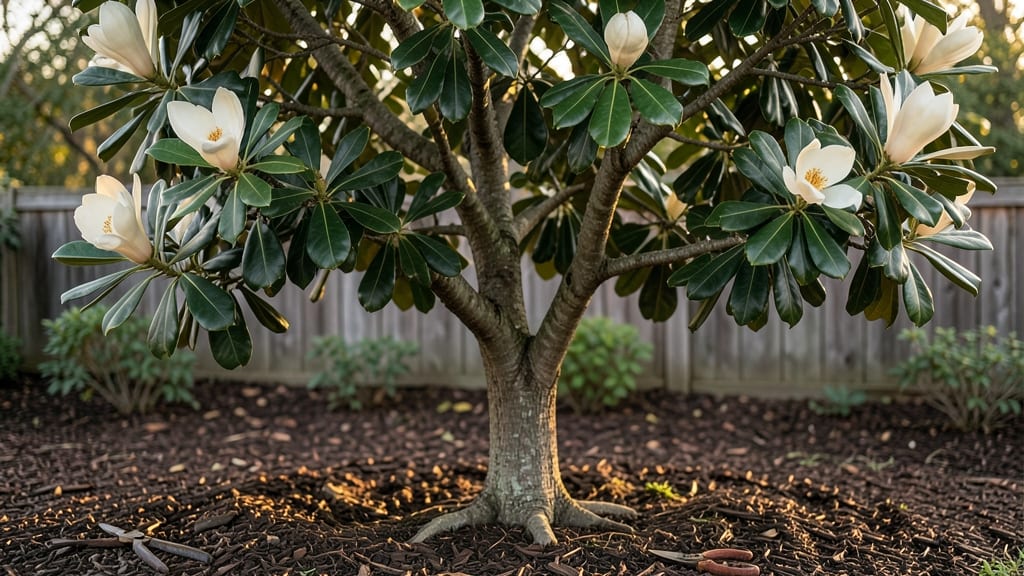
The magnolia tree foliage you’ll adore—deep green, velvety, and built to last—is the real showstopper, requiring almost no effort from you. 🌿 I’ve watched my Southern magnolia stand tall through droughts, ice storms, and even a summer where I forgot to water it, only to burst back into glossy perfection the next spring.
The secret to keeping those leaves looking their best isn’t complicated: prune just once a year (late winter, before buds swell), avoid overwatering, and resist the urge to fertilize unless your soil is truly poor.
Most problems—yellowing, brown edges, or pests—come from one of those three mistakes, and fixing them is simpler than you’d think.
By summer, you’ll have leaves so thick and rich they’ll make your neighbors green with envy. The foliage alone turns heads, but the fragrance when those creamy blooms appear? That’s the real magic. Let’s keep those leaves thriving without the fuss.
Works for both evergreen (Southern magnolia) and deciduous (like saucer magnolia) varieties—just adjust timing slightly. Here’s how to make it happen, step by step.
📚 In This Guide
- What you need
- Instructions
- Tips and common mistakes
- Wrapping up and next steps
What you need
- ● Magnolia Tree: Choose a species suited to your climate (e.g., Magnolia grandiflora for Southern regions or Magnolia stellata for cooler areas). Nursery-bought saplings (3–5 gallons) work best for easy planting.
- ● Well-Draining Soil: 2–3 cubic yards of a mix of native soil, compost (50%), and perlite/sand (20%) for optimal drainage. Test soil pH (5.5–6.5 ideal) with a kit.
- ● Mulch: 2–3 inches of organic mulch (pine bark or shredded leaves) to retain moisture and suppress weeds.
- ● Watering Can or Hose: A 5-gallon capacity can for young trees; a soaker hose for deep watering.
- ● Garden Gloves: Heavy-duty, nitrile-coated for protection while handling soil or thorns.
- ● Shovel & Spade: A round-point shovel for digging and a transplant spade (18–24 inches) for moving roots.
- ● Pruning Shears: Bypass pruners (for clean cuts) and loppers (for thicker branches). Sterilize with rubbing alcohol between cuts!
- ● Fertilizer: Slow-release, acid-loving plant fertilizer (e.g., 10-10-10 or magnolia-specific formula). Apply 2–3 times/year (spring, summer, fall).
- ○ Staking Kit (Optional): 3–4 stakes + tree ties for young trees in windy areas.
- ● Sunlight: Magnolias thrive in partial shade to full sun (6+ hours/day). Check your yard’s light conditions before planting!
- ● Space: Mature trees need 20–30 feet of clearance (varies by species). Measure twice!
- ● Patience: Young magnolias grow 1–2 feet/year. Slow and steady wins the glossy foliage game!
- ● Pest/Disease Alert: Keep an eye out for scale insects or fungal spots. Neem oil or copper fungicide can help if needed.
How to maintain year-round magnolia tree foliage
Here's the care routine that keeps magnolias lush and vibrant with minimal effort.
🌿 Step 1: Choose the Right Location for Optimal Growth
Magnolias thrive in partial shade to full sun, but their signature glossy foliage requires at least 4-6 hours of morning sunlight daily. I always plant mine where they receive dappled light—think beneath taller deciduous trees or on the east side of the house. This prevents leaf scorch while maintaining that signature sheen.
Here's the thing—magnolias hate wind. Their large leaves tear easily, so avoid exposed sites. A sheltered spot with well-draining soil (they despise soggy roots) is ideal. Test your soil first; magnolias prefer slightly acidic conditions (pH 5.0-6.5). If your soil is alkaline, amend with 2-3 inches of organic mulch (like pine bark) to lower the pH naturally.
💧 Step 2: Water Deeply and Infrequently
Once established, magnolias are drought-tolerant, but their foliage stays glossiest when watered deeply once a week during dry spells. I check by pushing my finger 3 inches into the soil—if it feels dry, it's time to water. Overwatering causes root rot, which turns leaves yellow and dull.
When you water, soak the root zone thoroughly until water runs out the drainage holes. Shallow watering encourages weak roots and poor leaf quality. Mulch with 3-4 inches of organic material (like shredded bark) to retain moisture and protect roots from temperature swings. Keep mulch 6 inches away from the trunk to prevent rot.
☀️ Step 3: Feed for Rich, Glossy Foliage
Magnolias aren’t heavy feeders, but a balanced, slow-release fertilizer in early spring keeps their leaves vibrant. I use a 10-10-10 formula (about 1 pound per 100 square feet) worked into the top 6 inches of soil. Avoid high-nitrogen fertilizers—they promote leaf growth at the expense of flower production, and we’re here for those leaves!
For established trees, a top-dressing of compost in late winter does wonders. The key is consistency: feed once in early spring and again in mid-summer if you notice new growth slowing. Yellowing leaves often signal over-fertilizing, so when in doubt, hold off.
✂️ Step 4: Prune Strategically for Healthy Growth
Pruning isn’t just about shaping—it’s about airflow and light penetration. I prune magnolias immediately after flowering (late spring) to remove dead, crossing, or weak branches. Never prune in fall or winter; you’ll risk encouraging new growth that can’t harden off before cold snaps.
Use clean, sharp pruners to make cuts just outside the branch collar. Avoid heavy pruning—magnolias respond poorly to drastic cuts. If you must reshape, limit pruning to no more than 25% of the canopy in one season. This keeps the tree’s energy focused on foliage production, not recovery.
🪴 Step 5: Protect Against Pests and Disease
Magnolias are generally pest-resistant, but scale insects and magnolia leaf gall can dull their shine. I inspect leaves monthly, especially on the undersides. If you spot scale (tiny bumps on stems/leaves), wipe them off with a soapy sponge or treat with neem oil (mix 1 tablespoon per gallon of water).
For fungal issues like leaf spot, improve airflow by thinning dense branches and watering at the base (never overhead). If you notice brown spots, remove affected leaves immediately and apply copper fungicide as a preventative. Healthy foliage starts with proactive care—don’t wait until problems appear.
Tips & tricks for perfect magnolia tree foliage
A few simple adjustments can transform your magnolia’s foliage from merely green to that coveted glossy, restaurant-worthy shine.
Lighting Strategy: The 4-6 hours of morning sunlight mentioned in Step 1 is non-negotiable for that signature sheen, but here's the secret: position your magnolia to catch the sun's softest rays. East-facing locations work best because harsh afternoon sun can scorch leaves. If planting near existing trees, choose deciduous varieties—they'll provide shade in summer while allowing sunlight through in winter when leaves are absent.
Soil pH Precision: Testing your soil's pH (aiming for 5.0-6.5) is crucial, but don't stop there. If you're amending with 2-3 inches of organic mulch like pine bark, re-test after 3 months. The pH can shift as the mulch breaks down, and magnolias are particularly sensitive to sudden changes. I've seen trees with perfect initial pH levels develop yellowing leaves just 6 months later because the soil acidity became too aggressive.
Watering Technique: When you're checking soil moisture at 3 inches deep, pay attention to the texture. Sandy soils will dry out faster than clay soils, so adjust your once-weekly watering schedule accordingly. For container-grown magnolias, water when the top inch of soil feels dry—these dry out much quicker than in-ground trees. The key is always thorough saturation until water runs from drainage holes.
Fertilizer Timing: The early spring feeding with 10-10-10 fertilizer is perfect, but here's what nobody tells you—magnolias actually appreciate a light feeding in early fall too. Use half the recommended amount (about 0.5 pounds per 100 square feet) to encourage root development before winter. This fall feeding helps the tree store nutrients that translate to glossier foliage the following spring.
Pro Tips for Magnolia Tree Foliage
- A few simple adjustments can transform your magnolia’s foliage from merely green to that coveted glossy, restaurant-worthy shine.
- Lighting Strategy: The 4-6 hours of morning sunlight mentioned in Step 1 is non-negotiable for that signature sheen, but here's the secret: position your magnolia to catch the sun's softest rays.
- Soil pH Precision: Testing your soil's pH (aiming for 5.0-6.5) is crucial, but don't stop there.
Frequently asked questions
Got questions about keeping your magnolia tree’s foliage lush and stunning? We’ve got answers!
Here are some of the most common queries—plus quick fixes and pro tips to keep those glossy leaves thriving with minimal effort.
How often should I water my magnolia tree to keep its foliage healthy?
Magnolias are drought-tolerant once established (after 1–2 years), but their glossy foliage thrives with deep watering 1–2 times per week during dry spells. Aim for 1–1.5 inches of water per week, either from rain or manual watering. Overwatering can cause yellow leaves, so always check soil moisture—stick your finger 2–3 inches deep; if it’s dry, water again.
Why is my magnolia tree losing leaves in winter? Is this normal?
Magnolias are evergreen in warm climates but may drop some leaves in winter due to cold snaps (below 10°F). This is normal—they’ll regrow in spring. To minimize stress, mulch heavily (3–4 inches) around the base and avoid pruning in late fall/winter. If leaves turn brown and crispy, your tree might need winter protection like burlap wraps for young trees.
Can I prune my magnolia tree to encourage thicker, glossier foliage?
Yes! Prune in late winter or early spring (before new growth) to shape the tree and remove dead/diseased branches. Avoid heavy pruning—magnolias bloom on old wood, so cutting too much can reduce flowers. For thicker foliage, focus on thinning out crowded branches to improve airflow and sunlight penetration. Never top the tree—this harms the structure.
What pests or diseases should I watch for to protect my magnolia’s foliage?
Common issues include:
- Magnolia scale: Sticky residue on leaves (honeydew) and white bumps. Treat with horticultural oil in early spring.
- Webworms: White webbing and chewed leaves. Handpick bags or use Bt (Bacillus thuringiensis) spray.
- Fungal leaf spot: Brown spots with yellow halos. Improve airflow and remove fallen leaves to prevent spread.
Are there low-maintenance magnolia varieties with the glossiest foliage?
If you want zero-fuss care with showstopping foliage, try:
- Little Gem: Compact (20–25 ft), glossy evergreen leaves, and drought-tolerant once established.
- Exmouth: Dark green, leathery leaves and no messy fruit (unlike some varieties).
- Saucer Magnolia (M. × soulangeana): Stunning spring blooms plus deep green, glossy summer foliage.
Wrapping up and next steps
Magnolia tree foliage is a low-maintenance, high-reward addition to any landscape—offering lush, glossy leaves that stay stunning year-round with minimal effort. Whether you’re drawn to their elegant blooms or simply their evergreen charm, these trees prove that beauty and simplicity go hand in hand. 🌿✨
Ready to elevate your outdoor space? Start by selecting the perfect magnolia variety for your climate and soil, then give it the basics—sunlight, well-draining soil, and occasional pruning. With just a little care, you’ll enjoy decades of effortless elegance and maybe even a few fragrant surprises along the way!