Trees
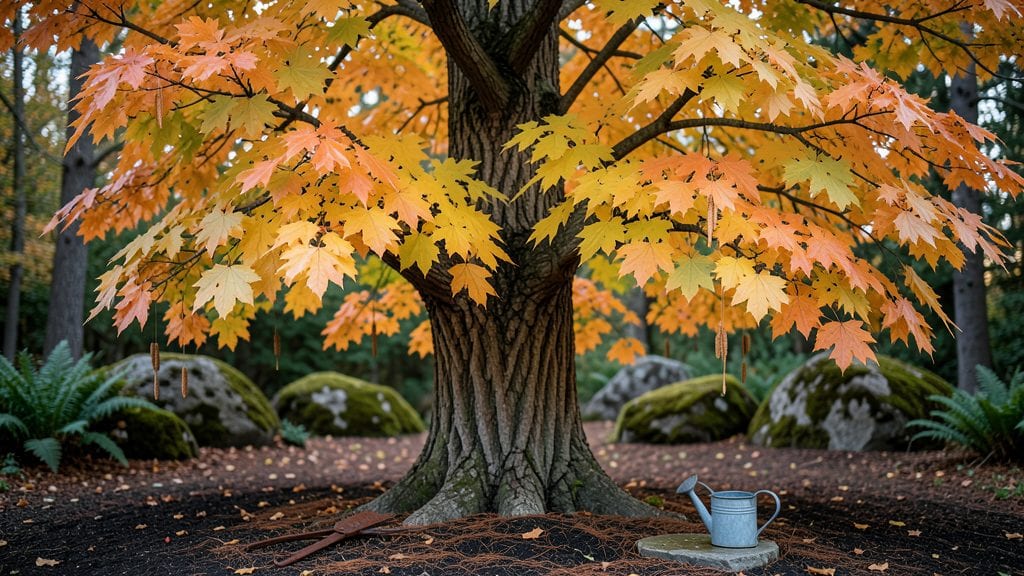
Washington’s harsh winters and summer droughts demand maple trees that refuse to surrender—like the Japanese maple or autumn blaze varieties that stand tall through every season. I’ve watched my own trees weather snow loads and scorching afternoons without flinching, their leaves turning fiery gold when others give up.
The key isn’t just picking the right species but matching them to your yard’s microclimate, from sun-drenched urban sidewalks to shaded rural woodlots.
For frost resistance, the autumn blaze maple (Acer × freemanii) is a standout—its hybrid vigor handles Washington’s temperature swings like a pro, while the drummond red maple thrives in drier soils. Both deliver stunning fall color and grow well in urban settings where space is tight.
You’ll need well-draining soil (amend with compost if your yard’s clay-heavy) and full sun for best results, though younger trees appreciate afternoon shade during summer’s peak heat.
By late fall, your maples will reward you with vibrant canopies that outshine neighbors’ lackluster choices. Prune in winter to shape growth, and water deeply during the first two years to establish strong roots.
In rural areas, these trees become wildlife magnets—squirrels, birds, and even deer rely on their seeds. Urban plantings? Choose smaller varieties like the dwarf amur maple for patios or street-side planting.
Local nurseries like Hamm’s Nursery in Puyallup or The Evergreen State College Arboretum offer Washington-adapted stock—ask for disease-resistant cultivars if your area has fungal issues. With the right pick, your maples will outlast you, their branches heavy with history and their leaves painting the sky every autumn.
Let’s get yours planted right.
📚 In This Guide
- What you need
- Instructions
- Tips and common mistakes
- Wrapping up and next steps
What you need
- ● Maple Tree Seedlings or Saplings: Choose frost-resistant varieties like Autumn Blaze, October Glory, or Red Sunset (available at local nurseries or online).
- ● Quantity: 1–3 trees, depending on desired canopy coverage.
- ● Soil Amendments: Compost (5–10 gallons) or well-rotted manure to improve drainage.
- ● Organic mulch (e.g., wood chips or straw, 2–3 inches thick).
- ● Tools: Shovel or trowel (for digging holes 2–3x wider than the root ball).
- ● Wheelbarrow (for transporting soil/amendments).
- ● Garden hose (with adjustable nozzle for watering).
- ● Pruning shears (sterilized, for shaping young trees).
- ● Tree stakes & ties (for windy Washington sites).
- ● Slow-release fertilizer (e.g., 10-10-10, 1 lb per tree).
- ● Soil pH tester (ideal range: 6.0–7.0 for maples).
- ● Drip irrigation system (for consistent moisture in dry spells).
How to select and plant frost-resistant maple trees in Washington
Washington’s climate demands maple varieties that handle cold snaps and seasonal shifts with ease.
Choose the Right Variety for Your Region
Washington’s diverse microclimates mean your choice depends on where you live. For western Washington’s milder winters, Japanese maples (Acer palmatum) thrive, especially varieties like 'Bloodgood' or 'Emperor I', which handle 10-15°F without issue. In eastern Washington, where temperatures dip below 0°F, opt for Norway maples (Acer platanoides) like 'Crimson King' or sugar maples (Acer saccharum), which are hardy down to -20°F.
Here’s the thing—avoid soft maples like silver maples (Acer saccharinum) unless you’re in the Puget Sound’s warmest pockets. They’re prone to disease in Washington’s damp winters. Instead, focus on hard maples (Acer saccharum) or field maples (Acer negundo), which tolerate the state’s frost cycles better. Check the USDA hardiness zone map to confirm your area’s suitability for your chosen variety.
Select the Optimal Planting Site
Maples need full sun to partial shade—at least 6 hours of sunlight daily—but they also appreciate afternoon shade in hot inland areas like Yakima. Avoid low-lying spots where cold air pools, as frost pockets can damage young roots. Instead, plant on a slightly elevated slope or near a south-facing wall to capture warmth.
Soil in Washington varies wildly: sandy in eastern regions, clay-heavy in western areas. Amend heavy clay with 3-4 inches of compost to improve drainage, while sandy soils benefit from a mix of peat moss and topsoil. Test your soil’s pH—maples prefer slightly acidic to neutral (6.0-7.0). If your soil is alkaline, add elemental sulfur to lower the pH gradually over a few months.
Plant at the Right Time and Depth
Fall is the best time to plant in Washington, giving roots 8-10 weeks to establish before winter. Aim for late September to early October, when soil temperatures are still warm but frost isn’t imminent. Spring planting is possible, but ensure the ground isn’t frozen—wait until mid-April when soil thaws to 45°F.
Dig a hole twice as wide as the root ball but no deeper. Place the tree so the top of the root ball sits 1-2 inches above ground level—settling soil can bury the trunk over time, leading to rot. Backfill with native soil (no amendments) and water deeply to eliminate air pockets. A 5-gallon bucket of water should soak the area evenly. Mulch with 3 inches of wood chips, keeping it 6 inches away from the trunk to prevent moisture buildup.
Water and Protect During Washington’s Frost Cycles
Water newly planted maples once a week for the first two months, then taper to every 10-14 days unless rain provides 1 inch of moisture. Deep watering—10-15 gallons per tree—encourages deep root growth. In winter, reduce watering but keep soil slightly moist to prevent drought stress when frosts arrive. Avoid overhead watering in cold snaps, as wet foliage freezes and damages leaves.
Young maples need winter protection in their first two years. Wrap the trunk with tree guard to prevent rodent damage, and loosely cover the root zone with 4-6 inches of straw mulch. In areas with extreme cold snaps below -10°F, wrap the canopy with burlap to shield tender new growth. Remove protective materials in early spring once temperatures consistently stay above 40°F to avoid trapping heat and encouraging pest activity.
Tips & tricks for thriving maple trees in Washington's climate
Washington’s frost-resistant maples need special attention to survive—and thrive—through the state’s dramatic seasonal shifts. Here’s what I’ve learned from years of working with these hardy varieties.
Variety Selection Matters: When choosing between Japanese maples for milder western regions (like 'Bloodgood') and Norway or sugar maples for eastern areas, consider the USDA hardiness zone where you live. For example, 'Emperor I' handles 10-15°F beautifully, but in Yakima’s colder winters, a sugar maple’s -20°F tolerance gives it the edge. I always check the Washington State University Extension map for precise local guidance—it accounts for microclimates that standard zone maps miss.
Soil Preparation is Non-Negotiable: The 3-4 inches of compost for heavy clay soils isn’t just about drainage—it’s about creating a buffer zone that protects roots from temperature fluctuations. In sandy eastern soils, the peat moss mix helps retain moisture during summer droughts while preventing waterlogging in winter. I’ve seen trees planted in unamended soil struggle with 40°F temperature swings between day and night, so take this step seriously.
Timing Your Planting Pays Off: Those 8-10 weeks before winter are crucial for root establishment, but don’t rush into spring planting. Waiting until soil reaches 45°F ensures roots won’t freeze after they’ve started growing. I’ve planted in early April when soil was still too cold, and the trees took months to recover. For fall planting, mark your calendar for late September—this gives roots time to anchor before the first frost.
Winter Protection Secrets: The 4-6 inches of straw mulch isn’t just decoration—it acts as insulation against -10°F snaps while preventing soil heaving. For young trees in exposed areas, I add an extra layer of burlap around the canopy, but I always remove it in early spring when temperatures stay above 40°F to prevent heat buildup. The key is balance: too much protection can smother the tree, while too little leaves it vulnerable.
Pro Tips for Maple Trees Washington
- Washington’s frost-resistant maples need special attention to survive—and thrive—through the state’s dramatic seasonal shifts.
- Variety Selection Matters: When choosing between Japanese maples for milder western regions (like 'Bloodgood') and Norway or sugar maples for eastern areas, consider the USDA hardiness zone where you live.
- Soil Preparation is Non-Negotiable: The 3-4 inches of compost for heavy clay soils isn’t just about drainage—it’s about creating a buffer zone that protects roots from temperature fluctuations.
Frequently asked questions
Got questions about growing maple trees in Washington’s chilly climate? Here are answers to the most common queries—so you can plant with confidence!
Which maple varieties are best for Washington’s cold winters?
Washington’s frost-resistant favorites include Norway Maple (hardy to -30°F), Amur Maple (tolerates -40°F), and Autumn Blaze (disease-resistant). For urban areas, Freeman Maple thrives with minimal care. Always check local microclimates—valleys may need extra protection!
When is the ideal time to plant maple trees in Washington?
Plant in early spring (March–April) or fall (October–November) for best root establishment. Avoid summer heat or winter frost. Bare-root saplings can go in during dormancy (Nov–Feb), but container-grown trees prefer milder soil temps. Water deeply after planting!
How do I protect young maple trees from Washington’s harsh winters?
Use mulch (3–4 inches) around the base (keep it 6" from the trunk) and wrap the trunk with tree guard or burlap to prevent sunscald. Avoid heavy snow buildup—gently brush it off branches. For extreme cold snaps, cover tender varieties with frost cloth (but remove it by spring!).
Why are my Washington maple leaves turning yellow or brown?
Yellowing leaves often signal nutrient deficiency (iron/chlorosis) or overwatering. Brown edges? Check for drought stress or fungal diseases (like tar spot). Test soil pH (maples prefer 6.0–7.0) and adjust with sulfur or lime. Prune dead branches in late winter to improve airflow.
Can I grow maple trees in containers in Washington’s climate?
Yes! Dwarf varieties like ‘Armstrong’ or ‘Columnare’ work well in large containers (15+ gallons). Use well-draining soil and move pots to a sheltered spot in winter. Water regularly—containers dry out faster—and fertilize lightly in spring. Just know they’ll need repotting every 2–3 years as roots grow!
Wrapping up and next steps
Washington’s maple trees thrive with the right frost-resistant varieties, offering stunning canopies and year-round beauty. Whether you’re a gardening newbie or a seasoned green thumb, choosing the perfect species—like Norway, Sugar, or Japanese maples—can transform your landscape into a vibrant, resilient haven. 🌳
Now that you’re equipped with the best picks and care tips, why not take the next step? Visit a local nursery, sketch a planting plan, or join a gardening group in Washington to share your excitement. Your future maple tree awaits—let’s make it grow! 🌱