
Pruning
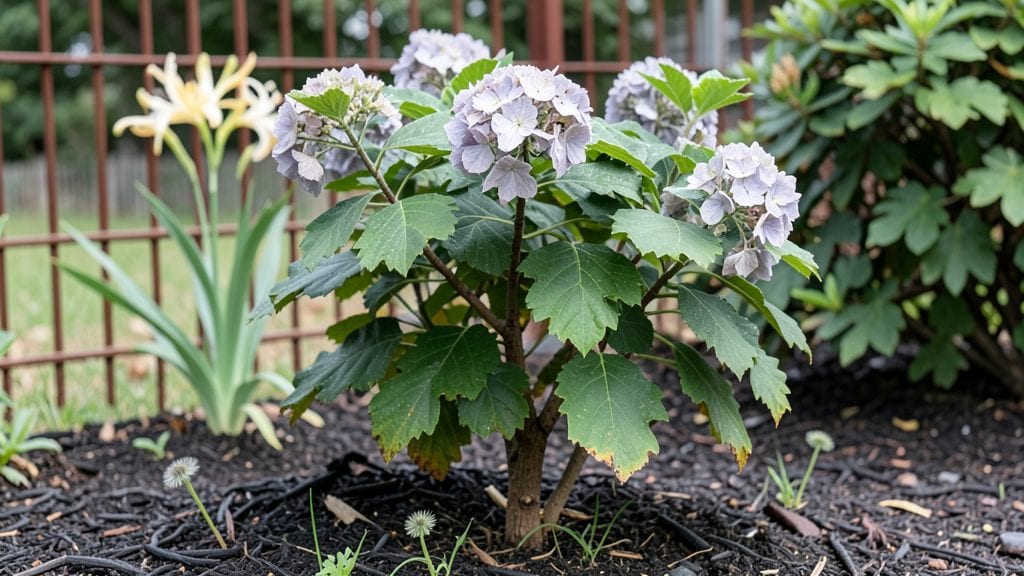
There's nothing quite like the oak leaf hydrangea tree standing sentinel in your Pacific Northwest garden, its bold foliage and seasonal drama turning heads year-round. 🌿 I planted mine five years ago after falling for its oak-like leaves and the way it transforms from white summer blooms to fiery fall colors—something most hydrangeas can't do.
The real magic happens when you prune it the right way, creating that layered, architectural shape that keeps it stunning even in winter.
This isn't your average shrub—it thrives in partial shade, handles our wet winters better than most, and grows happily in well-draining, acidic soil (think amended native soil or a mix of compost and peat moss).
The key to its success lies in layered pruning: you shape it in early spring, clean up in late winter, and let it grow naturally through summer. Most gardeners over-prune, but this tree rewards a lighter touch—just enough to maintain that dramatic, tree-like form while encouraging fresh blooms.
What you'll end up with is a year-round focal point that outshines most ornamentals. In summer, its white lacecap flowers cascade like snow; by fall, the leaves blaze orange and red; and even in winter, the exfoliating bark adds texture.
The best part? It handles our region's humidity and occasional drought once established—no fussy care required. Let's get into the exact pruning technique that keeps it looking like a million bucks.
Whether you're dealing with a young sapling or an established specimen, the same principles apply—just adjust the timing and tools. We'll cover when to prune for maximum blooms, how to spot signs of stress (like leaf scorch), and why this tree is the PNW's secret weapon for low-maintenance, high-impact landscaping.
Ready to transform your garden's backbone?
📚 In This Guide
- What you need
- Instructions
- Tips and common mistakes
- Wrapping up and next steps
What you need
- ● Pruning shears: Bypass pruners (sharp, clean, and disinfected with rubbing alcohol). Quantity: 1 pair (or 2 if working on large branches).
- ● Loppers: For thicker branches (1/4"–1" diameter). Quantity: 1 pair.
- ● Pruning saw: For branches >1" in diameter. Quantity: 1 (hand saw or folding pruning saw).
- ● Gloves: Heavy-duty gardening gloves (cut-resistant, like mechanics’ gloves). Quantity: 1 pair.
- ● Disinfectant: 70% isopropyl alcohol or bleach solution (1 part bleach to 9 parts water) for sterilizing tools.
- ○ Pruning sealant: Optional but helpful for sealing large cuts (e.g., Tanglefoot Tree Wound Pruning Seal).
- ● Ladder or step stool: Sturdy and tall enough to reach the tree’s canopy safely.
- ● Trash bags or bucket: For collecting pruned branches.
- ● Extension pole pruners: For high branches without a ladder.
- ● Work gloves with grip: For extra comfort during long sessions.
- ● Notebook & pencil: To sketch a quick pruning plan before you start.
- ● Mulch: Shredded bark or wood chips to protect the base after pruning.
How to prune oak leaf hydrangea for Pacific Northwest year-round interest
Here's the method I've used for years to keep my oak leaf hydrangeas thriving through PNW's wet winters and mild summers.
✂️ Step 1: Understand the Three-Layered Approach
Oak leaf hydrangeas have three distinct growth phases: spring flush, summer blooms, and winter structure. The key is working with all three. First, identify your plant's scaffold branches—the main limbs that form the tree's framework. These should be spaced 8-12 inches apart along the trunk. Look for branches that are at least ½ inch thick at their base.
I always start pruning in late winter (February-March) when the plant is dormant. This is when you'll see the natural shape most clearly. Use clean, sharp pruners to make cuts just outside the branch collar—the swollen area where the branch meets the trunk. Never leave stubs, as they invite disease and weaken the plant.
✂️ Step 2: Prune for Structure in Late Winter
Remove any dead, crossing, or diseased branches first—these are easy to spot as they'll be brown, brittle, or growing directly into other branches. Cut these out completely at their origin. Next, thin out any branches that are growing inward or too closely together. Aim to maintain an open center that allows light and air to circulate.
Here's the thing—oak leaf hydrangeas bloom on old wood, so you'll never cut back into last year's growth. Focus instead on shaping the current year's growth that emerges from the scaffold branches. You'll see these as the thinner, more flexible stems. Reduce these by about 30% to encourage stronger growth later.
✂️ Step 3: Light Summer Maintenance After Blooming
After the summer blooms fade (typically in July-August), it's time for your second pruning. This is when you'll shape the plant for winter interest. Look for any branches that are growing too long or leggy—these will produce fewer blooms next year. Cut these back by ⅓ to ½ of their length, making your cuts just above a set of leaves or buds.
Pay special attention to the ends of branches. If they're growing too upright, they'll be less visible in winter. Instead, encourage a more horizontal growth habit by cutting back just enough to promote side branching. You'll see new growth emerging within 2-3 weeks—this is your signal that the plant is responding well.
⏰ Step 4: Final Pruning for Winter Structure
In November-December, give your oak leaf hydrangea one last look. The goal now is to enhance its winter structure. Remove any branches that are rubbing together or growing in awkward directions. You can also lightly shape the plant by cutting back any stems that have grown too long over the summer.
This final pruning is all about creating visual interest. Look for branches with interesting bark patterns or those that will show off the plant's exfoliating bark in winter. Cut these back just enough to reveal the attractive stems. Remember, oak leaf hydrangeas keep their leaves into winter, so don't be too aggressive—you want to maintain some foliage for year-round interest.
🌿 Step 5: Clean Up and Prepare for Next Season
After your final pruning, clean up the area around the plant. Remove all fallen leaves and debris to prevent fungal diseases from overwintering. Sterilize your pruners with rubbing alcohol between cuts to prevent spreading any potential pathogens.
I always finish by applying a 2-3 inch layer of mulch around the base of the plant, keeping it 6 inches away from the trunk. This helps protect the roots from winter temperature fluctuations. Water deeply once more before the ground freezes to ensure the plant has enough moisture to make it through the winter.
Tips & tricks for perfect oak leaf hydrangea pruning
Here's what I wish I knew sooner about keeping these stunning shrubs looking their absolute best through every season.
Timing is Everything: That February-March late winter window in Step 1 is crucial because the plant is fully dormant, making it easier to see the natural shape. If you prune too early (like January), you might accidentally cut back new growth that's just starting. And if you wait until spring, you'll miss the opportunity to shape before the new flush of growth begins. I've learned the hard way—waiting until April means you're always playing catch-up with leggy growth.
Branch Collar Matters: When making cuts in Step 1, always look for that swollen area where the branch meets the trunk—the branch collar. Cutting just outside this collar (never inside it) helps the wound heal faster and prevents disease. I used to make clean cuts at the branch base, but I noticed my plants had more dieback. Now I use a magnifying glass to spot those collars clearly, especially on older branches.
Visualize the Winter Garden: In Step 4, when you're doing your final pruning for winter structure, take a moment to step back and visualize how the plant will look in winter. Look for branches with interesting bark patterns or those that will show off the exfoliating bark. I've found that cutting back just enough to reveal these features creates stunning winter interest that lasts through the PNW's damp, gray months. This is where the "art" of pruning comes in—it's not just about cutting, it's about sculpting.
Sterilize Your Tools: This is non-negotiable after Step 5. I used to just wipe my pruners between cuts, but I started noticing more dieback in my plants. Now I keep a small bottle of rubbing alcohol handy and sterilize my tools between every cut. It's a small habit that makes a huge difference in preventing the spread of diseases like fire blight, which can be devastating to hydrangeas.
Pro Tips for Oak Leaf Hydrangea Tree
- Here's what I wish I knew sooner about keeping these stunning shrubs looking their absolute best through every season.
- Timing is Everything: That February-March late winter window in Step 1 is crucial because the plant is fully dormant, making it easier to see the natural shape.
- Branch Collar Matters: When making cuts in Step 1, always look for that swollen area where the branch meets the trunk—the branch collar.
Frequently asked questions
Got questions about caring for your oak leaf hydrangea tree? You’re not alone! Here are answers to the most common concerns—from pruning to placement—so you can keep this PNW staple thriving year-round.
When is the best time to prune oak leaf hydrangeas in the Pacific Northwest?
Prune your oak leaf hydrangea in late winter or early spring (February–March) before new growth begins. This timing ensures you shape the tree without sacrificing blooms. For layered pruning, focus on removing oldest branches first to create air flow and structure. Avoid pruning in fall—it can stimulate tender growth that may not survive winter.
How do I know which branches to cut for layered pruning?
Start by identifying the three oldest layers of branches (usually the thickest, outermost stems). Remove one-third of the oldest layer each year to maintain balance. Look for branches that are thinner than a pencil—these are candidates for thinning. Use sharp bypass pruners to make clean cuts just above a bud or lateral branch. Pro tip: Sketch a rough diagram of your tree’s layers before pruning to visualize the process!
Can oak leaf hydrangeas handle the wet PNW climate?
Oak leaf hydrangeas are drought-tolerant once established and thrive in the PNW’s rainy climate. However, poor drainage can cause root rot, so plant in well-amended soil with a slight slope to encourage water runoff. Mulch around the base (but not touching the trunk) to retain moisture and regulate soil temperature. If your tree is in a soggy spot, consider adding compost or sand to improve drainage.
Why aren’t my oak leaf hydrangeas blooming?
Oak leaf hydrangeas bloom on old wood, so aggressive pruning in late summer or fall can reduce flowers. If blooms are sparse, check for these issues:
- Over-pruning: Avoid cutting back more than 1/3 of the tree annually.
- Insufficient sunlight: They need 6+ hours of sun daily for optimal blooms.
- Nutrient deficiency: Feed with a balanced fertilizer in early spring if growth is weak.
- Age: Younger trees may take 2–3 years to establish blooming.
What’s a good alternative if oak leaf hydrangeas are hard to find?
If you’re struggling to locate oak leaf hydrangeas (Hydrangea quercifolia), consider these PNW-friendly alternatives with similar structure and foliage:
- Smoke bush (Cotinus coggygria): Drought-tolerant with feathery foliage and layered branches.
- Serviceberry (Amelanchier): Offers white spring blooms, fall color, and edible berries.
- Ninebark (Physocarpus): Tough, layered growth with exfoliating bark.
- Viburnum (Viburnum rhytidophyllum): Evergreen-like leaves and winter interest.
Wrapping up and next steps
The oak leaf hydrangea tree is a stunning, low-maintenance addition to your Pacific Northwest garden, offering year-round structure and beauty with the right pruning care.
By mastering layered pruning—whether for shaping, rejuvenation, or seasonal maintenance—you’ll keep this versatile tree thriving for decades. Remember: patience and precision are key, but the results are worth every snip!
Ready to transform your outdoor space? Grab your tools and schedule your first pruning session—your oak leaf hydrangea will thank you with lush, vibrant growth! 🌿✂️