
Pruning
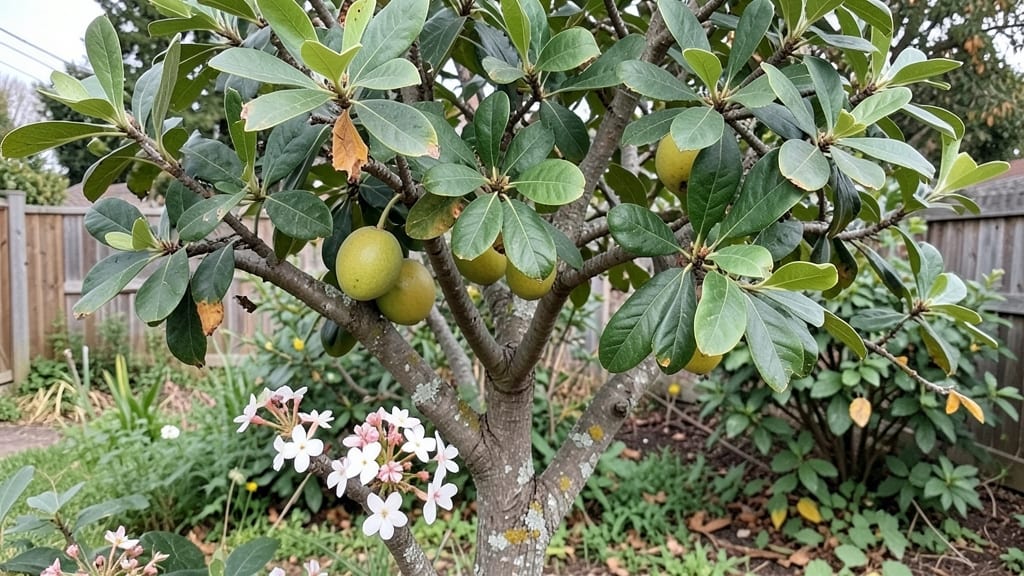
Pruning your pineapple guava tree isn’t just about keeping it tidy—it’s the secret to frost-resistant branches that keep producing fruit year after year. 🌱 I’ve watched my trees survive winter freezes because of this simple shaping technique, and the difference in harvests is night and day.
The key is timing and technique: prune lightly after harvest to encourage new growth, then do a heavier cutback before winter to protect tender wood. You’ll need sharp pruners, a clean workspace, and about 30 minutes for a mature tree—no fancy tools required.
The goal is an open center that lets sunlight reach all branches, which means fewer dead spots and more fruit.
What you’ll end up with is a tree that looks like a natural work of art—rounded, sturdy, and covered in glossy leaves. The fruit stays sweeter, the branches hold up in wind, and you’ll have fewer broken limbs after ice storms.
Plus, the pruned branches make great cuttings for propagating new trees.
This method works in zones 8-11, though heavy freezes may still damage young trees. For colder climates, grow it in containers and move it indoors during winter. Let’s get those branches shaped for next season’s harvest!
📚 In This Guide
- What you need
- Instructions
- Tips and common mistakes
- Wrapping up and next steps
What you need
- ● Pruning shears: Bypass pruners (sharp, clean, and sterilized with rubbing alcohol to prevent disease). Recommended: Felco F-2 or similar.
- ● Loppers: For thicker branches (1–2 inches in diameter). Look for ratcheting loppers for ease.
- ● Pruning saw: For branches thicker than 2 inches. A bow saw or pruning saw with a fine-tooth blade works best.
- ● Disinfectant: 70% isopropyl alcohol or a pruning sealant (like Tanglefoot Tree Wound Pruning Seal) to coat cuts.
- ● Gloves: Heavy-duty, cut-resistant gloves (e.g., Mechanix Wear or Poulan brand).
- ● Safety gear: Safety glasses and long sleeves to protect from thorns and debris.
- ● Ladder or step stool: Sturdy and tall enough to reach the tree’s canopy safely (6–10 feet, depending on tree height).
- ● Trash bags or bucket: For collecting pruned branches and debris.
- ○ Marking twine or flags: Optional but helpful for labeling branches to remove.
- ● Pruning paint: For sealing larger cuts (e.g., Tree Seal by Espoma).
- ● Tree pruning guide: A branching chart or app (like iTree) for visualizing cuts.
- ● Extension pole: For high branches (e.g., Fiskars X27 telescopic pole saw).
- ● Pruning rope: To lower heavy branches gently.
How to prune a pinapple guava tree for frost resistance and fruit production
This is the method I’ve used to keep my pinapple guava thriving in cooler climates—strong branches, better airflow, and fruit that lasts.
🌿 Step 1: Time Your Pruning for Optimal Growth
The best time to prune is late winter or early spring, just before new growth begins. This ensures the tree has plenty of time to heal before summer heat arrives. Avoid pruning in fall—new growth won’t harden off before frost, and tender branches will suffer. If you must prune in summer, do it in early morning or late evening to reduce stress from heat and sun exposure.
Look for dormant buds along the branches—these are your pruning targets. Healthy buds appear plump and slightly raised, while damaged ones look shriveled or discolored. Prune when temperatures are above 40°F to prevent shock. If frost is forecast, delay pruning until after the last expected freeze.
✂️ Step 2: Remove Dead, Weak, or Crossing Branches First
Start by cutting out any dead, diseased, or broken branches—these are easy to spot because they’re brown, brittle, or lack leaves. Use clean, sharp pruners to make a smooth cut just outside the branch collar (the swollen area where the branch meets the trunk). A jagged cut invites rot, so take your time.
Next, remove branches that cross or rub against each other. These create wounds that weaken the tree and invite pests. If two branches grow too close, keep the stronger one (the one with more leaves or thicker growth) and cut the other back to its origin. Thin out crowded areas to improve airflow and sunlight penetration—this is key for frost resistance.
☀️ Step 3: Shape for Frost Resistance and Fruit Production
Pinapple guava trees benefit from an open, vase-like shape that allows sunlight to reach all branches and air to circulate freely. Start by cutting back overly long or leggy branches to encourage bushier growth. Aim to reduce branch length by one-third to stimulate new, stronger shoots. Avoid heavy pruning—never remove more than 25% of the canopy in one season.
Focus on removing inward-growing branches that block light from the center. The goal is to create a balanced structure where sunlight hits every part of the tree. For frost-prone areas, prioritize pruning branches that would otherwise trap cold air against the trunk. Leave strong, outward-facing branches to form the new framework.
💧 Step 4: Clean Up and Protect the Tree
After pruning, sterilize your tools with rubbing alcohol to prevent spreading disease. Collect all clippings and dispose of them away from the tree—leaving them on the ground can harbor pests. If your area experiences hard frosts, consider wrapping the trunk with burlap or frost cloth for the first few weeks after pruning to protect healing cuts.
Water the tree deeply after pruning to help it recover. Focus on the root zone, keeping the soil evenly moist but not soggy. Avoid overwatering, as fresh cuts are more susceptible to rot. Within 2-3 weeks, you should see new growth emerging from the pruned areas—a sign the tree is healing well.
Tips & tricks for pruning pinapple guava trees
Here's what nobody tells you about keeping your pinapple guava thriving in cooler climates—these little details make all the difference.
Timing is Everything: That 40°F minimum temperature isn't just a suggestion—it's critical for preventing shock. I've seen trees struggle when pruned too early, even if buds look dormant. Test your pruning time by checking local frost dates: aim to prune 2-3 weeks after your last expected frost. This gives the tree time to harden off before summer's heat arrives. If you're unsure, wait until you see new leaf buds swelling—that's your green light.
Branch Selection Secrets: When choosing which branches to keep in Step 3, look for ones with multiple dormant buds spaced along the length. These branches will produce more fruit and grow stronger. I always prioritize branches that grow at a 45-degree angle or less from the trunk—they're less likely to break under heavy fruit loads. If you're unsure which branch is stronger, do the "scratch test": gently scratch the bark on two competing branches. The one with thicker, smoother bark is your winner.
Pruning Precision: That one-third reduction in branch length isn't arbitrary—it's based on how much stress the tree can handle. For thicker branches (over 1 inch in diameter), make your cuts at a 45-degree angle just outside the branch collar. For thinner branches, a straight cut is fine. I use a hand saw for thick branches and bypass pruners for everything else—it makes all the difference in cut quality. Remember to sterilize your tools between cuts to prevent disease spread, especially if you're working with multiple trees.
Post-Pruning Care: The 2-3 week recovery period is your chance to observe how the tree responds. If you don't see new growth by then, check for yellowing leaves (sign of stress) or sap oozing (sign of infection). In frost-prone areas, I've found that wrapping the trunk with burlap for the first two weeks after pruning helps protect healing cuts. Water deeply once a week during this period, focusing on the root zone—this encourages strong root growth that supports new branch development.
Pro Tips for Pinapple Guava Tree
- Here's what nobody tells you about keeping your pinapple guava thriving in cooler climates—these little details make all the difference.
- Timing is Everything: That 40°F minimum temperature isn't just a suggestion—it's critical for preventing shock.
- Branch Selection Secrets: When choosing which branches to keep in Step 3, look for ones with multiple dormant buds spaced along the length.
Frequently asked questions
Got questions about growing, pruning, or caring for your pineapple guava tree? You're not alone! Here are some of the most common concerns—plus expert answers to keep your tree thriving and fruiting year-round.
How often should I prune my pineapple guava tree?
Prune your pineapple guava tree twice a year: once in late winter (before new growth starts) to shape it and remove dead wood, and again in early summer to encourage fruit production. Light trimming between harvests keeps it manageable. Pro tip: Avoid heavy pruning in fall—it can stress the tree before winter.
Can pineapple guava trees survive frost? How do I protect them?
While pineapple guava trees are moderately frost-resistant (tolerating temps down to 20°F), young trees or severe cold can damage them. Wrap the trunk in burlap and cover with frost cloth for young trees. Mature trees often bounce back with minimal pruning after frost damage. Bonus: Mulch heavily in winter to insulate roots!
Why isn’t my pineapple guava tree producing fruit?
Lack of fruit? Check these three things:
- Sunlight: Needs 6+ hours of full sun daily—move it if shaded.
- Pruning: Over-pruning reduces flowering. Keep 30-50% of the canopy.
- Age: Young trees (under 2 years) focus on growth. Be patient!
If the issue persists, test soil pH (ideal: 6.0–7.0) and fertilize with citrus-specific nutrients (high in nitrogen early, potassium later).
What’s the best way to prune for shape without sacrificing fruit?
Use the “open-center” method: Trim branches to create an umbrella-like shape, allowing sunlight to reach the center. Cut back 1/3 of the oldest wood annually to encourage new growth. Pro tip: Prune just above a leaf node (not stubs) to promote faster healing and fruit-bearing branches.
Are there any alternatives to pineapple guava if I want a low-maintenance fruit tree?
If pineapple guava seems high-maintenance, consider these drought-tolerant, frost-resistant alternatives:
- Loquat tree – Thrives in warm climates, produces sweet fruit with minimal pruning.
- Fig tree – Hardy, fast-growing, and tolerates poor soil.
- Pomegranate – Drought-resistant and produces vibrant fruit with light pruning.
Pineapple guava still wins for year-round harvests and tropical vibes—but these are great backups!
Wrapping up and next steps
Growing a thriving pineapple guava tree is a rewarding experience—especially when you master the art of frost-resistant pruning! By following the right techniques, you’ll encourage lush growth, protect your tree from cold snaps, and enjoy a bountiful harvest year-round. 🌱✨
Now that you’re equipped with the knowledge, roll up your sleeves and get pruning! Start with a fresh assessment of your tree, gather your tools, and take action this season.
Before you know it, you’ll be savoring sweet, fragrant fruit while admiring your beautifully shaped pineapple guava tree. Happy gardening! 🍍🌿