Pruning
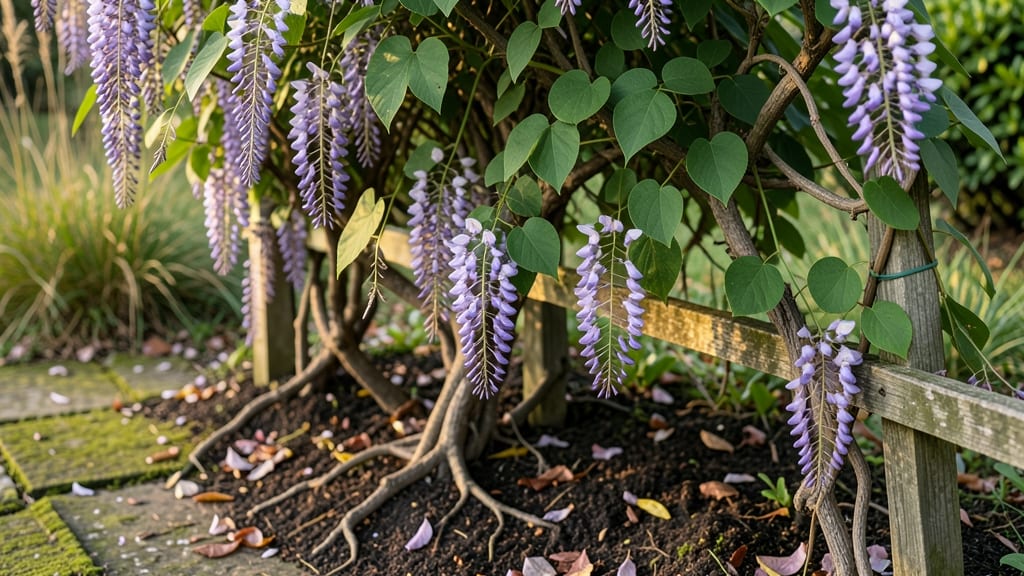
That first flush of blooms on the purple wisteria tree in spring—it’s the kind of sight that makes neighbors stop and stare. 🌿 Pruning Wisteria sinensis or Wisteria floribunda isn’t just about keeping the vines in check; it’s the secret to turning a wild tangle into a showstopping cascading display that blooms reliably every season.
I’ve wrestled with these vines for years, and what I’ve learned will save you from the heartbreak of leggy, sparse blooms.
The key starts with support—these climbers need a sturdy trellis, fence, or arbor to grip, or they’ll sprawl into an unruly mess. Plant in full sun with well-draining soil rich in organic matter, and water deeply after planting to encourage strong root growth.
But here’s the real game-changer: pruning in late winter before new growth appears. This isn’t just trimming—it’s sculpting the vine to focus energy on next year’s blooms.
With the right cuts, you’ll see dense clusters of fragrant purple flowers by spring, followed by lush green foliage that lasts all summer. The vines will grow 10-20 feet per year, so regular pruning keeps them manageable while encouraging more blooms.
Even if you’ve let yours get out of control, there’s still time to turn it around—just start with the basics and watch it transform.
Whether you’re working with a young sapling or an established vine, the principles stay the same. The payoff? A vibrant, long-lived climber that becomes the star of your garden. Let’s get those shears ready and make it happen.
📚 In This Guide
- What you need
- Instructions
- Tips and common mistakes
- Wrapping up and next steps
What you need
- ● Pruning shears – Bypass pruners (sharp, 6-8" blades) for clean cuts on small stems.
- ● Loppers – 8-12" bypass loppers for thicker branches (up to 2" diameter).
- ● Pruning saw – For branches thicker than 2" (avoid bolt cuts!).
- ● Gloves – Heavy-duty, cut-resistant gloves (wisteria thorns are no joke!).
- ● Disinfectant (70% isopropyl alcohol or bleach solution) – Clean tools between cuts to prevent disease.
- ○ Rope or twine – For supporting heavy vines post-pruning (optional but helpful).
- ○ Pruning sealant – Optional for large cuts (1" or wider) to prevent decay.
- ● Weather check – Prune on a dry, cloudy day (avoid frost or extreme heat).
- ● Safety gear – Long sleeves, closed-toe shoes, and eye protection (thorns + tools = ouch!).
- ● Ladder or step stool – For high branches (ensure it’s stable!).
- ● Trash bags or bucket – To collect pruned branches (compost or dispose properly).
- ○ Sharpie or marker – Optional: Mark branches to track growth (helpful for first-timers!).
How to prune a purple wisteria tree for vibrant, healthy growth
Mastering wisteria pruning transforms wild tangles into a showstopping floral display.
🌿 Step 1: Time Your Pruning for Maximum Bloom Impact
Prune your purple wisteria in late winter or early spring—just as buds begin to swell but before new growth emerges. This timing ensures you remove dead wood while preserving next season's flower buds, which form on last year's growth. Avoid pruning after mid-summer; any cuts made then will produce only foliage, not flowers.
I like to mark the last frost date on my calendar and schedule pruning 2-3 weeks after that. The tree's dormant state makes it easier to see where to cut—look for brown, brittle branches that snap easily versus green, flexible new growth. This visual cue tells you exactly where the dead wood ends and living growth begins.
✂️ Step 2: Remove Dead and Crossing Branches First
Start by eliminating dead, diseased, or broken branches using clean, sharp pruning shears. Cut back to the main stem or lateral branch where the wood is still green and healthy. I always make my cuts at a 45-degree angle, about ¼ inch above a bud or outward-facing lateral branch—this encourages water to run off and prevents rot.
Next, remove any branches that cross or rub against each other. These create wounds that invite disease and weaken the tree's structure. Look for branches growing toward the center of the plant; these compete for sunlight and nutrients. Thin these out first, even if they're still alive, to improve airflow and light penetration throughout the canopy.
🌱 Step 3: Shape the Tree for Balance and Airflow
Wisteria grows aggressively, so I focus on creating an open, vase-like structure that allows light to reach all branches. Start by identifying the main trunk and primary branches—these should be spaced 6-12 inches apart along the trunk. Remove any branches growing directly upward; these create a dense, unmanageable tangle.
For lateral branches, cut back to 2-3 buds from their point of origin. This encourages bushier growth while maintaining the tree's natural shape. I like to step back every few cuts to visualize the overall form—wisteria responds well to gentle guidance, so avoid aggressive pruning. The goal is to create a framework where sunlight can penetrate to the center of the plant.
☀️ Step 4: Encourage Flowering with Strategic Cuts
Purple wisteria flowers on old wood, so the key is to preserve last year's growth while stimulating new growth in the right places. After shaping, I make light heading cuts on the remaining branches—this means trimming back the tips by ⅓ to ⅕ of their length to encourage branching. These cuts should be made just above a bud that faces outward to promote an open, airy structure.
Here's the thing—if you see long, bare stems with no buds, don't panic. These can be pruned back harder to encourage new growth from lower buds. Just avoid cutting into old, woody growth that has no buds; this wood won't produce new shoots. The result? A tree that bursts with vibrant purple blooms year after year.
⏰ Step 5: Post-Pruning Care for Rapid Recovery
After pruning, apply a balanced, slow-release fertilizer to replenish nutrients lost during the process. Water deeply at the base of the tree to help it recover, but avoid overwatering—wisteria roots need to breathe. I also like to add a 2-3 inch layer of mulch around the base (keeping it 6 inches away from the trunk) to retain moisture and regulate soil temperature.
Monitor the tree closely in the weeks following pruning. New growth should appear within 4-6 weeks, signaling the tree is recovering well. If you notice yellowing leaves or stunted growth, it may need additional nutrients or protection from pests. Wisteria is resilient, but proper aftercare ensures it thrives—and rewards you with dramatic, cascading blooms for decades.
Tips & tricks for pruning purple wisteria trees
Transforming tangled wisteria into a flourishing masterpiece takes precision—and these insights will help you prune like a pro.
Timing is Everything: The late winter to early spring window is non-negotiable for preserving next year's blooms. I've learned this the hard way—pruning too late in summer means sacrificing flowers for foliage. Check for swollen buds (they'll look like tiny green beads) to confirm you're ready. If you miss this timing, wait until after flowering to avoid cutting off potential blooms. The dormant state of the tree also makes dead wood identification crystal clear—brown, brittle branches snap easily while live growth remains flexible.
Cutting Technique Matters: That 45-degree angle isn't just for show—it's essential for proper water runoff and preventing rot. I always make my cuts about ¼ inch above an outward-facing bud to encourage new growth in the direction I want. For thick branches, use three cuts: first undercut, then top cut, and finally remove the branch. This prevents bark tearing. When shaping, remember that wisteria responds best to gradual pruning—never remove more than ⅓ of the foliage in one season, or you'll shock the tree.
Visualizing the Structure: Step back frequently to assess your work—this is where the magic happens. You're aiming for that open vase shape that lets sunlight penetrate to the center. I imagine the tree as a fountain: the main trunk as the base, primary branches as the tiers, and lateral branches as the cascading water. Remove any branches growing directly upward or toward the center—they'll only create dense, unmanageable growth. The goal is to create a framework where every branch gets equal sunlight exposure.
Post-Pruning Recovery: The 4-6 week recovery period is your chance to earn the tree's trust. After pruning, I always apply a balanced fertilizer and monitor for new growth as my progress indicator. Yellowing leaves? That's your cue to check for overwatering or nutrient deficiencies. And remember—mulch isn't just for looks. That 2-3 inch layer around the base (kept 6 inches from the trunk) works like a thermal blanket, regulating soil temperature and retaining moisture while preventing weeds. The tree will thank you with vigorous new growth and next year's spectacular blooms.
Pro Tips for Purple Wisteria Tree
- Transforming tangled wisteria into a flourishing masterpiece takes precision—and these insights will help you prune l...
- Timing is Everything: The late winter to early spring window is non-negotiable for preserving next year's blooms. I'v...
- Cutting Technique Matters: That 45-degree angle isn't just for show—it's essential for proper water runoff and preven...
Frequently asked questions
When is the best time to prune a purple wisteria tree?
The ideal window is late winter or early spring, just as new growth begins but before buds swell. This timing encourages vigorous blooming while removing dead or weak stems. Avoid pruning in fall—it can stimulate tender growth that won’t survive winter. Pro tip: If you miss the spring window, a light pruning in summer (after flowering) is better than none at all!
Can I prune wisteria in winter? What if it’s dormant?
Pruning dormant wisteria in deep winter (Dec–Feb) is risky because cold stress can weaken the tree. However, if you must prune in winter, do it on a mild day and avoid heavy cuts. Focus on removing dead, broken, or crossing branches—never more than 20% of the foliage. Always use sharp, clean tools to prevent disease. Wait until late winter for major shaping!
How much can I prune a purple wisteria tree each year?
Wisteria thrives on gradual pruning. Aim to remove no more than 20–30% of the plant’s foliage annually, spread over 2–3 sessions if needed. Over-pruning stresses the tree, reducing blooms. For established trees, prioritize:
- Dead or diseased wood
- Branches rubbing together
- Long, leggy stems (cut back to a strong bud or lateral branch)
Why isn’t my purple wisteria blooming after pruning?
Blooming issues often stem from over-pruning or cutting back flower buds (which form on old wood). If your tree skips blooms:
- Check if you pruned too late (after buds formed in spring).
- Ensure it gets 6+ hours of sunlight daily—wisteria needs full sun to flower.
- Fertilize in early spring with a balanced, phosphorus-rich formula to encourage blooms.
Are there alternatives to pruning if my wisteria is too large or aggressive?
If your wisteria is out of control, pruning isn’t the only solution. Consider:
- Container growing: Train it on a trellis or arbor in a large pot for easier control.
- Root barriers: Install underground barriers to limit spreading (but expect some root escape!).
- Selective removal: Dig up and remove one aggressive root/shoot per year to slow spread.
- Dwarf varieties: Opt for Wisteria floribunda ‘Amethyst Falls’ or Wisteria sinensis ‘Prolific’—they’re less vigorous but still stunning!
Wrapping up and next steps
The purple wisteria tree is a stunning addition to any garden, but its magic lies in the care you put into it—especially pruning! By mastering the right techniques, you’ll unlock year-round blooms and a healthier, longer-lived plant.
Remember: patience, timing, and precision are key—your efforts will pay off with cascading purple beauty for seasons to come.
Ready to transform your wisteria into a showstopper? Start small: pick one pruning session this season and observe the difference! For extra guidance, explore local gardening workshops or connect with fellow wisteria enthusiasts online. Happy pruning—your garden will thank you! 🌸✂️