Trees
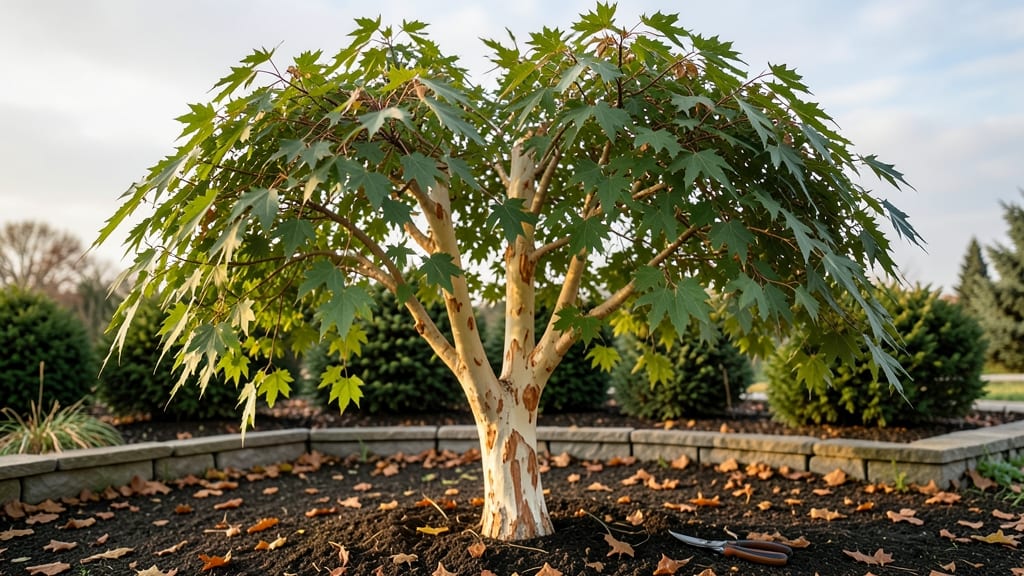
The white bark maple tree transforms your Pacific Northwest garden into a winter masterpiece with its striking cinnamon-colored bark and graceful form. 🌿 I fell in love with this tree after seeing how it stood out against gray skies during our damp winters—its peeling bark becomes even more dramatic when dusted with frost.
The tree's upright growth habit and seasonal color changes make it a standout focal point, whether planted alone or as part of a layered landscape design.
This frost-resistant beauty thrives in partial shade to full sun, making it perfect for urban yards, woodland gardens, or as a dramatic accent near patios.
Its vibrant fall foliage and upright branches create vertical interest that draws the eye upward, while the exfoliating bark adds texture that complements both modern and traditional garden styles. The tree's natural shape also makes it ideal for creating privacy screens or framing entryways without overwhelming smaller spaces.
You'll appreciate how this tree holds its interest year-round—from the delicate spring foliage to the fiery autumn leaves and the striking winter bark. Pair it with evergreens like rhododendrons or hemlocks for contrast, or plant it alongside spring bulbs to create a layered seasonal display.
The white bark maple's adaptability means it works equally well in formal gardens or as a naturalistic specimen in woodland settings.
For best results, give it space to mature—these trees can reach 20-25 feet tall with a similar spread—while ensuring well-drained soil. The tree's natural elegance means minimal pruning is needed, allowing you to enjoy its graceful form with minimal maintenance.
Whether you're designing a new garden or refreshing an existing one, this tree promises to be the showstopper your landscape deserves.
📚 In This Guide
- What you need
- Instructions
- Tips and common mistakes
- Wrapping up and next steps
What you need
- ● White bark maple sapling (Acer griseum): A healthy, 1-3 gallon container-grown tree (or bare-root if planting in early spring).
- ● High-quality potting soil or native soil mix: At least 50 lbs of well-draining, slightly acidic soil (pH 5.0–6.5). Mix in 10 lbs of compost for nutrients.
- ● Organic mulch: 2–3 cubic feet of shredded bark or wood chips to retain moisture and regulate temperature.
- ● Slow-release fertilizer: A balanced 10-10-10 or organic option (e.g., fish emulsion) for early growth.
- ● Watering can or hose with a gentle spray nozzle: For deep watering without damaging roots.
- ● Pruning shears: Sharp, bypass-style shears (sterilized with rubbing alcohol).
- ● Garden gloves: Heavy-duty to protect against thorns and rough bark.
- ○ Staking kit (optional for young trees): 2–3 5-foot bamboo stakes and soft tree ties.
- ● Sunlight: A full-sun to partial-shade location (6+ hours of sunlight daily).
- ● Space: Minimum 20 feet of clearance (mature height: 20–30 feet).
- ● Frost tolerance: Plant in USDA Hardiness Zones 4–7 (ideal for PNW’s chilly winters!).
- ● Drainage: Avoid low-lying areas or clay-heavy soils (amend with perlite if needed).
- ● Tree guard: A wire mesh cylinder to protect from deer or rabbits.
- ● Soil moisture meter: To monitor water needs during drought.
- ● Fungicide (preventative): Copper-based spray for fungal disease prevention.
- ● Seasonal fertilizer: Granular 12-4-8 for fall/winter root growth.
Step-by-Step guide to planting and caring for white bark maple trees
Here's how to establish a stunning white bark maple that thrives in Pacific Northwest climates.
🌱 Step 1: Choose the Perfect Planting Location
White bark maples need full sun to partial shade—at least 6 hours of direct sunlight daily. In the Pacific Northwest's cooler climate, they tolerate more shade than other maples, but their signature white bark really pops with morning sun and afternoon shade. Avoid low spots where cold air settles, as these trees are frost-resistant but not frost-proof.
Test the site by observing how sunlight moves across it throughout the day. The ideal spot will have well-draining soil—white bark maples hate soggy roots. If your soil feels compacted when squeezed, amend it with 2-3 inches of compost before planting. This ensures strong root development right from the start.
🪴 Step 2: Dig the Hole and Plant Correctly
Dig a hole twice as wide as the root ball but no deeper. This gives roots room to spread without sinking too far, which can suffocate them. Gently remove the tree from its container and loosen any circling roots with your fingers—these will strangle the tree if left intact. I always tap the root ball on all sides to encourage roots to grow outward.
Place the tree in the hole so the top of the root ball sits level with the surrounding soil. Backfill with native soil mixed with compost (about 1 part compost to 3 parts soil). Water deeply to settle the soil, then add a 2-inch layer of mulch around the base, keeping it 3 inches away from the trunk. This protects roots from temperature swings and retains moisture.
☀️ Step 3: Water Deeply and Establish a Care Routine
Water deeply once a week for the first two months after planting, providing 1-2 gallons per week depending on rainfall. You'll know it's enough when water drains 6 inches deep—stick a screwdriver into the soil to check. Overwatering is the biggest mistake here; white bark maples are drought-tolerant once established but need consistent moisture to root in.
After the first two months, reduce watering to once every 2-3 weeks unless you're in an extreme drought. The tree's white bark actually helps reflect sunlight, reducing water needs. Fertilize lightly in early spring with a balanced 10-10-10 fertilizer—just ½ cup per year for young trees. Too much fertilizer causes weak growth and reduces frost resistance.
✂️ Step 4: Prune for Shape and Health
Prune in late winter or early spring before new growth begins. Remove any dead, diseased, or crossing branches first—these compete for energy and can invite pests. Thin out 10-20% of the canopy to improve airflow, which prevents fungal issues common in Pacific Northwest climates. Use clean, sharp pruners and make cuts just outside the branch collar.
Shape the tree gradually over time. White bark maples have a naturally elegant form, but you can encourage a single-trunk structure by removing competing leaders early. Avoid heavy pruning in fall—it stimulates new growth that won't harden off before winter. If you must prune later in the season, do so by mid-August to allow wounds time to heal before frost.
Tips & tricks for perfect white bark maple planting
Between us, planting a white bark maple isn't rocket science, but these little details make all the difference for long-term success.
Location Intelligence: That 6 hours of sunlight is non-negotiable for the white bark to develop its signature color. I've seen these trees struggle in spots that get afternoon shade only—morning sun is key. If your yard only gets 4-5 hours, plant near a south-facing wall that reflects extra light. The Pacific Northwest's cooler climate means you can push the shade envelope slightly, but don't go beyond partial shade.
Root Development Hack: When loosening those circling roots in Step 2, I make a point to gently separate them all the way around the root ball. These roots can strangle the tree if left intact, and I've seen them wrap around like vines in neglected plants. Tap the root ball firmly on all sides after loosening—this encourages roots to grow outward rather than stay compacted. The wider the root spread, the more stable your tree will be in winter winds.
Watering Wisdom: That 6-inch deep watering check in Step 3 is your best friend. I always use a screwdriver to test—when it slides in easily, you've hit the mark. The first two months are critical because the tree's root system is still finding its footing. Pro tip: Water in the morning so the roots have all day to absorb moisture before evening evaporation. In extreme drought periods, you might need to supplement that weekly watering with an extra gallon every couple of weeks.
Pruning Precision: When shaping your tree in Step 4, focus on removing branches that grow toward the center of the tree first. These compete for sunlight and create weak wood. I always make my cuts just outside the branch collar—the little swollen area where the branch meets the trunk. This healing technique prevents the tree from getting infected. And remember, that 10-20% canopy thinning isn't about drastic changes—it's about gradual improvement over several years.
Pro Tips for White Bark Maple Tree
- Between us, planting a white bark maple isn't rocket science, but these little details make all the difference for lo...
- Location Intelligence: That 6 hours of sunlight is non-negotiable for the white bark to develop its signature color. ...
- Root Development Hack: When loosening those circling roots in Step 2, I make a point to gently separate them all the ...
Frequently asked questions
Got questions about the stunning white bark maple tree? You’re not alone! Here are answers to the most common ones—from planting tips to care hacks—so you can make the most of this Pacific Northwest standout.
How cold can a white bark maple tree tolerate?
The white bark maple (Acer griseum) is one of the most frost-resistant maples, thriving in USDA zones 4-8. It handles temperatures as low as -30°F (-34°C) once established, making it perfect for snowy winters. Young trees may need winter protection in harsher climates.
When is the best time to plant a white bark maple?
Plant in early spring or fall (4-6 weeks before the first frost) for ideal root establishment. Avoid summer heat or winter freezing, which can stress the tree. If planting in fall, water deeply before the ground freezes to prevent drought stress.
How fast does a white bark maple grow, and how large does it get?
This tree grows at a moderate pace (12-24 inches per year) and matures to 20-30 feet tall with a 20-25 foot spread. Its slow-to-medium growth makes it manageable for urban landscapes, but patience is key for full impact.
What are common problems with white bark maples, and how do I fix them?
Watch for aphids, scale insects, or powdery mildew. Treat pests with horticultural oil or insecticidal soap. For mildew, improve airflow and avoid overhead watering. Yellowing leaves may signal iron deficiency—apply chelated iron or adjust soil pH if needed.
Can I grow a white bark maple in a container, or does it need to be planted in the ground?
While possible in large containers (20+ gallons), this tree prefers the ground for long-term health. Container-grown trees may struggle with root constraints and winter cold. If you must pot it, use well-draining soil and move indoors during extreme freezes.