Flowers
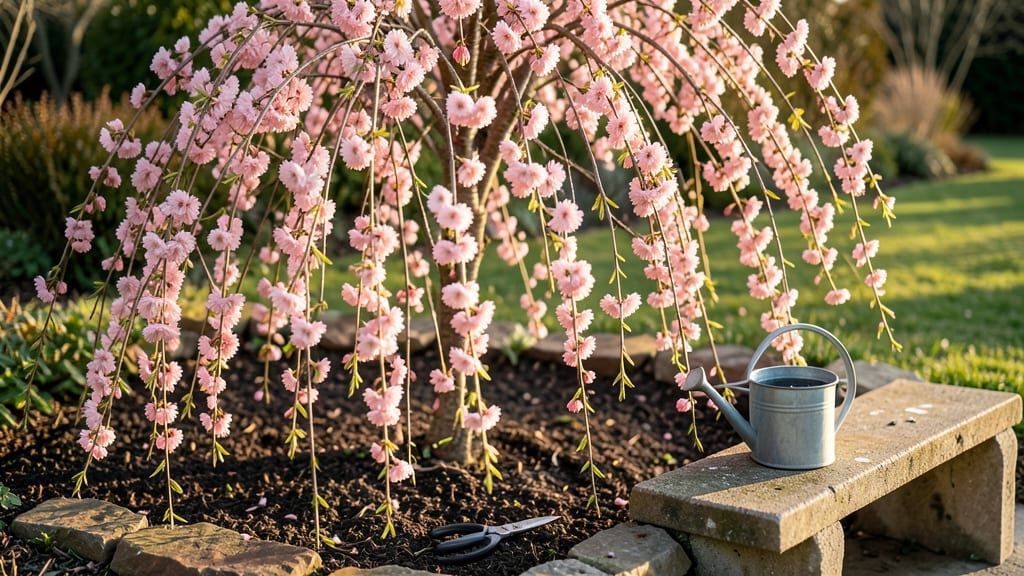
The weeping cherry tree with pink flowers turns Pacific Northwest gardens into living watercolors each spring. 🌸 I planted mine near the patio after years of admiring photos—now it’s the first thing guests notice, its cascading branches heavy with blossoms that smell like cherry blossom tea on a breeze.
This tree thrives in partial shade or morning sun, making it perfect for underplanting with ferns and hostas. The key is spacing it 15–20 feet from structures—its mature spread is wide but controlled.
Pair it with boxwoods for structure or azaleas for layered color, and you’ve got a showstopper that performs from March through May.
What you’ll love most is how it transforms your space: pink clouds of flowers against evergreen foliage create a mood no other tree can match. The bark adds winter interest, and birds adore the insects it attracts.
Just be ready for the occasional cleanup—those petals don’t stay pristine forever, but that’s part of the charm.
Works as a standalone statement piece or anchored in a mixed border. For best results, plant in well-draining soil and mulch heavily to preserve moisture. The payoff? A garden that feels like a postcard every spring—without the postage stamp price tag.
📚 In This Guide
- What you need
- Instructions
- Tips and common mistakes
- Wrapping up and next steps
What you need
- ● Weeping cherry tree sapling: Choose a Prunus serrulata ‘Kanzan’ or Prunus subhirtella ‘Autumnalis’ (dwarf varieties for smaller spaces). 1 plant (or more for clusters).
- ● High-quality potting soil: 50 lbs (well-draining, slightly acidic, pH 5.5–6.5).
- ● Organic mulch: 3–5 cubic feet (cedar or pine bark to retain moisture and suppress weeds).
- ● Slow-release fertilizer: 10–20 lbs (balanced 10-10-10 or acid-loving plant formula).
- ● Watering can or hose with a gentle spray nozzle: 1 unit (for deep, consistent hydration).
- ● Shovel or trowel: 1 unit (for digging holes 3x wider and 2x deeper than the root ball).
- ● Garden gloves: 1 pair (to protect hands from thorns and soil).
- ● Pruning shears: 1 unit (sterilized, for shaping and removing dead branches).
- ○ Staking kit (optional): 1–2 stakes + ties (if planting in windy areas or for young saplings).
- ○ Tree support collar (optional): 1 unit (to protect the trunk from lawn equipment).
- ○ Soil pH test kit (optional): 1 kit (to ensure optimal growing conditions).
Step-by-step guide to planting and caring for weeping cherry trees
Here's how to bring that dreamy pink spring canopy to your Pacific Northwest garden.
🌱 Step 1: Choose the Perfect Planting Spot
Weeping cherry trees need full sun—at least 6 hours daily—to produce their legendary pink blooms. In the Pacific Northwest's often cloudy spring, pick a location that gets morning sun and afternoon light even when skies are overcast. Avoid spots where afternoon shade lingers, as this weakens flowering.
Check the soil drainage first—these trees hate soggy roots. Dig a hole twice as wide as the root ball but no deeper. The top of the root ball should sit 1-2 inches above ground level when planted. I always test drainage by filling the hole with water and waiting—if it doesn't drain within 30 minutes, amend with 2-3 inches of compost to improve drainage.
🪴 Step 2: Plant with Care for Long-Term Health
Gently remove the tree from its container and loosen any circling roots with your fingers. Place it in the hole so the graft union (the swollen area near the base) sits 2-3 inches above soil level—this prevents rot. The weeping branches should naturally drape downward, so don't force them to stand upright.
Backfill with the native soil (no amendments needed) and tamp lightly as you go. Water deeply to settle the soil, then create a 2-inch deep watering basin around the base. Mulch with 3-4 inches of wood chips, keeping it 6 inches away from the trunk to prevent moisture buildup. This mulch ring helps retain moisture while protecting roots from winter chill.
☀️ Step 3: Nurture for Maximum Bloom Potential
Water once weekly during the first growing season, aiming for 1-2 gallons each time. You'll know it's enough when water drains to 6 inches deep. In the Pacific Northwest's wet climate, overwatering is the real risk—these trees prefer slightly drier conditions once established.
Fertilize lightly in early spring with a balanced 10-10-10 formula, using ¼ pound per inch of trunk diameter. For a 3-inch trunk, that's about ¾ cup. Avoid high-nitrogen fertilizers—they encourage leafy growth at the expense of flowers. Prune only to remove dead branches or crossing limbs; never "thin" the canopy, as weeping cherries rely on their natural shape for that signature pink waterfall effect.
⏰ Step 4: Prepare for Winter and Next Year's Blooms
When fall arrives, stop fertilizing entirely. The tree needs to harden off before winter. In the Pacific Northwest's mild winters, weeping cherries rarely need protection, but if you're in a colder microclimate, wrap the trunk with burlap during extreme cold snaps. The blooms will arrive sooner if you prune lightly in late winter—just remove any broken branches and shape the canopy to encourage air circulation.
Here's the thing—weeping cherries need cross-pollination for fruit, but their flowers are so stunning they're often planted for ornament alone. If you want cherries, plant a second variety within 50 feet. Watch for pink buds in late winter—that's your signal spring is coming, and those dramatic canopies will follow.
Tips & tricks for perfect weeping cherry tree blooms
Here's what nobody tells you about getting those showstopping pink canopies every spring.
Sunlight Strategy: Those 6 hours of daily sun are non-negotiable for vibrant blooms. I've seen trees planted in spots with morning sun but afternoon shade—big mistake. The Pacific Northwest's cloud cover means you need that afternoon light to compensate. If your yard has limited sun, consider a south-facing location where the sun tracks across the sky.
Drainage Test: The 30-minute drainage test is your best friend. I've planted too many trees in spots that looked fine until the first heavy rain. If water pools after 30 minutes, you're not just risking root rot—you're setting up a battle with fungal diseases that can weaken the tree before it even flowers. That 2-3 inches of compost makes all the difference in heavy clay soils.
Mulch Matters: That 3-4 inches of wood chips isn't just decoration—it's insulation. In our mild winters, it protects roots from temperature swings that can stress the tree. The key is keeping it 6 inches from the trunk to prevent moisture buildup that causes rot. I always use cedar chips because they resist decomposition longer and add a nice aroma to the garden.
Pruning Precision: Late winter pruning is your secret weapon for next year's blooms. When you see those pink buds appearing, that's your cue—remove only dead or crossing branches. Never thin the canopy, because those weeping branches create the dramatic effect. I use clean, sharp pruners and make cuts just outside the branch collar to prevent damage.
Pro Tips for Weeping Cherry Tree Pink Flowers
- Here's what nobody tells you about getting those showstopping pink canopies every spring.
- Sunlight Strategy: Those 6 hours of daily sun are non-negotiable for vibrant blooms. I've seen trees planted in spots...
- Drainage Test: The 30-minute drainage test is your best friend. I've planted too many trees in spots that looked fine...
Frequently asked questions
Got questions about cultivating or enjoying your weeping cherry tree with pink flowers? You’re not alone! Here are some of the most common queries from gardeners in the Pacific Northwest—and beyond.
When do weeping cherry trees with pink flowers bloom?
Most weeping cherry varieties (like Prunus subhirtella or Prunus serrulata ‘Kanzan’) bloom in late winter to early spring, typically February through April in the PNW. Chilly nights and warm days trigger flowering—so if your tree isn’t blooming, check your hardiness zone (USDA Zones 5–8) and ensure it gets full sun (6+ hours/day).
Do these trees need special care after heavy rain or wind?
Weeping cherries have delicate branches, so storms can cause damage. Prune lightly in late winter (before buds swell) to remove broken limbs. Stake young trees if needed, and mulch around the base (3–4 inches deep) to protect roots. Avoid heavy pruning after flowering—wait until summer or early fall for major shaping.
Can I grow a weeping cherry tree in a container or small yard?
Yes! Dwarf varieties like Prunus serrulata ‘Shirofugen’ (weeping form) thrive in 15–25 gallon containers with well-draining soil. Choose a pot with drainage holes and repot every 2–3 years. For small yards, opt for Prunus subhirtella ‘Pendula’, which matures at 15–20 feet tall—still dramatic, but space-efficient!
Why aren’t my weeping cherry tree’s pink flowers as vibrant?
Dull pink blooms often signal nutrient deficiency, overwatering, or poor sunlight. Boost color by:
- Fertilizing in early spring with balanced 10-10-10 or acid-loving plant food.
- Ensuring 6+ hours of sun daily (partial shade can reduce vibrancy).
- Avoiding soggy soil—cherries hate “wet feet.”
Pro tip: Deadhead spent blooms to encourage more flowers next season!
Are weeping cherry trees good for pollinators like bees and butterflies?
Their early spring blooms provide a critical food source for bees, butterflies, and hummingbirds when other flowers are scarce. Plant near native perennials (like lupine or salmonberry) to create a pollinator paradise. Just avoid spraying pesticides—cherry trees are pesticide-sensitive!
Wrapping up and next steps
The weeping cherry tree’s pink blossoms are more than just a fleeting spring spectacle—they’re a symbol of resilience, beauty, and the Pacific Northwest’s vibrant spirit.
Whether you’re dreaming of planting one in your garden or simply admiring them from afar, these trees remind us that nature’s most stunning displays often require patience and care. 🌸
Ready to bring this magic to your space? Start by researching local nurseries or planning your tree’s perfect spot—then take the first step toward a canopy of pink dreams! 🌿